Ennovation
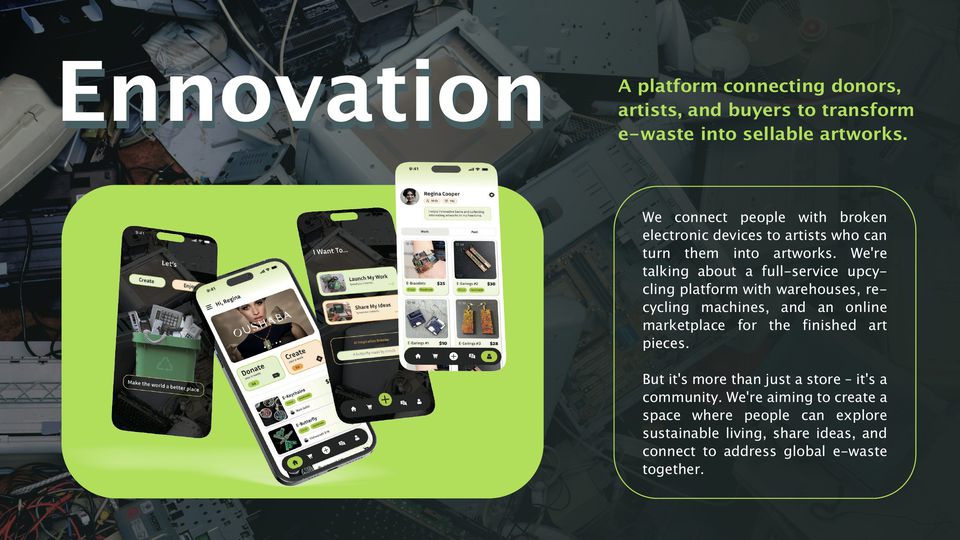
Ennovation is a service design concept for a platform that turns e-waste into art. Donors give broken devices through recycling machines or by post, artists use the parts as materials, and buyers purchase the finished works in the same app.
- Context
- Personal project
- Timeline
- October – December 2024
- Role
- Research, service design and app design
- Methods
- Survey, stakeholder map, personas, value proposition canvas, SWOT, business model canvas, service blueprint
A platform connecting donors, artists, and buyers to transform e-waste into sellable artworks.

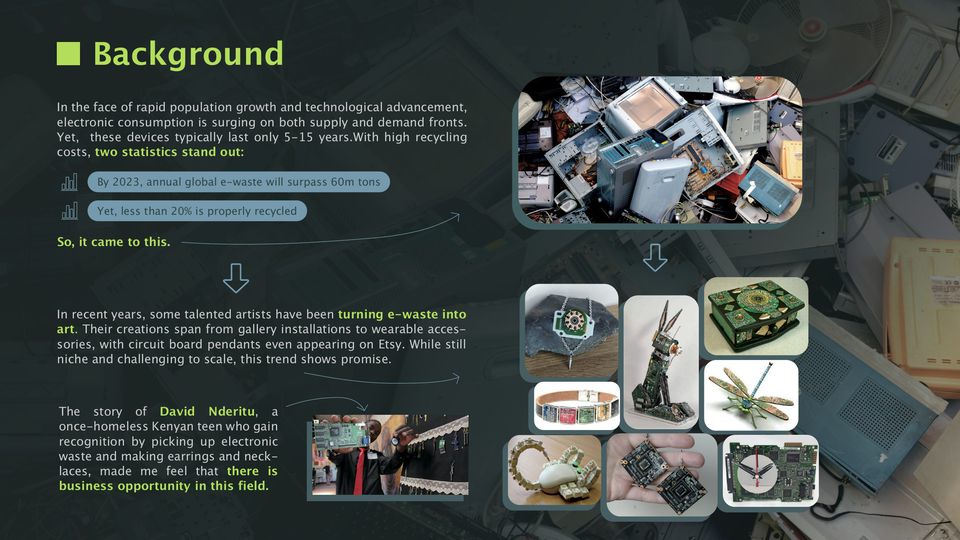
Electronic devices last five to fifteen years, and less than 20% of the e-waste they leave is properly recycled.
Population growth and new technology keep raising the production and consumption of electronics, while recycling remains costly. Annual global e-waste was expected to pass 60 million tons by 2023.
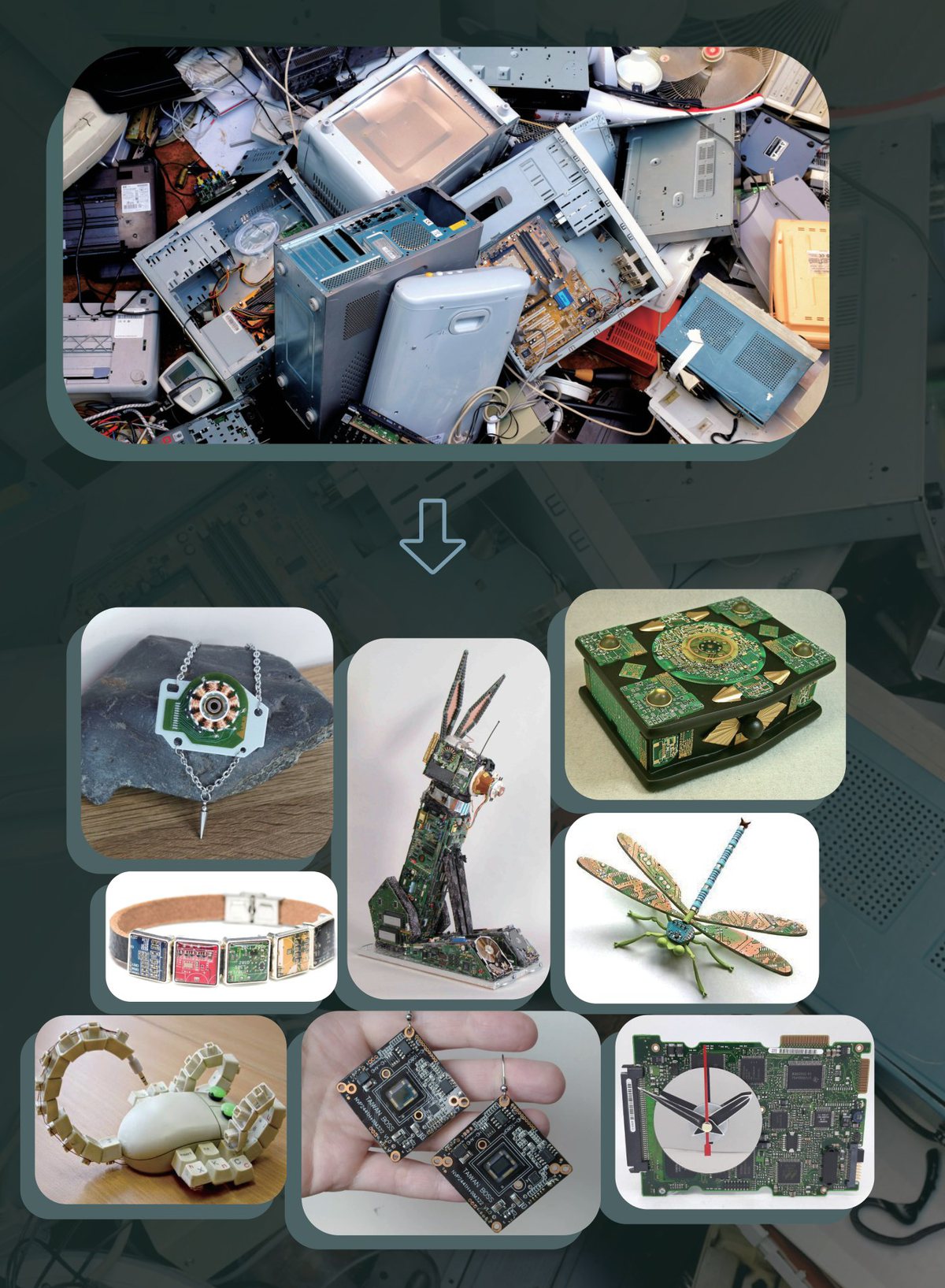
Some artists already turn e-waste into art, from gallery installations to wearable accessories, and circuit board pendants are sold on Etsy. The practice is niche and hard to scale. The story of David Nderitu, a once-homeless Kenyan teenager who gained recognition by making earrings and necklaces from electronic waste he collected, showed me a business opportunity in the field.
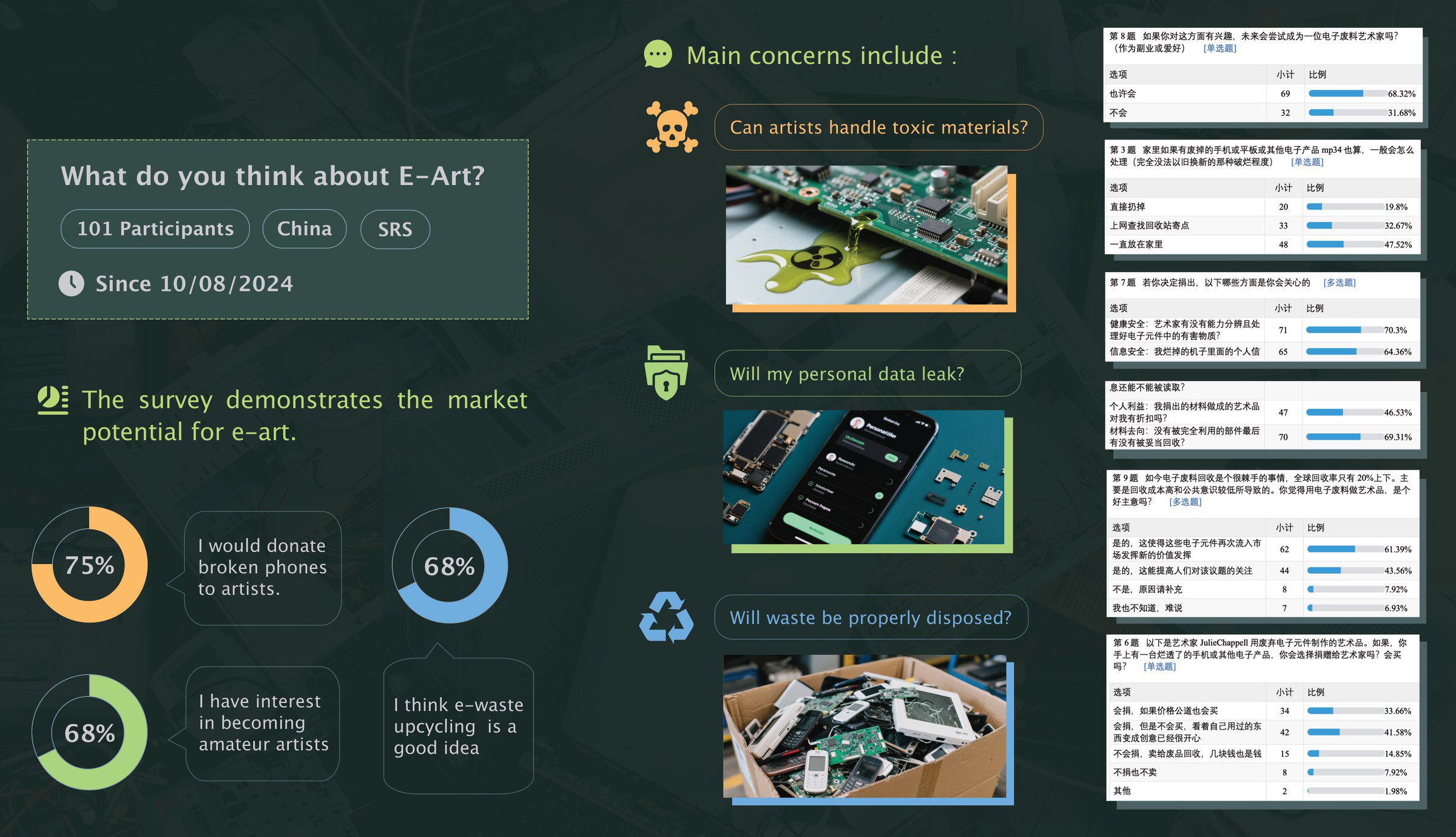
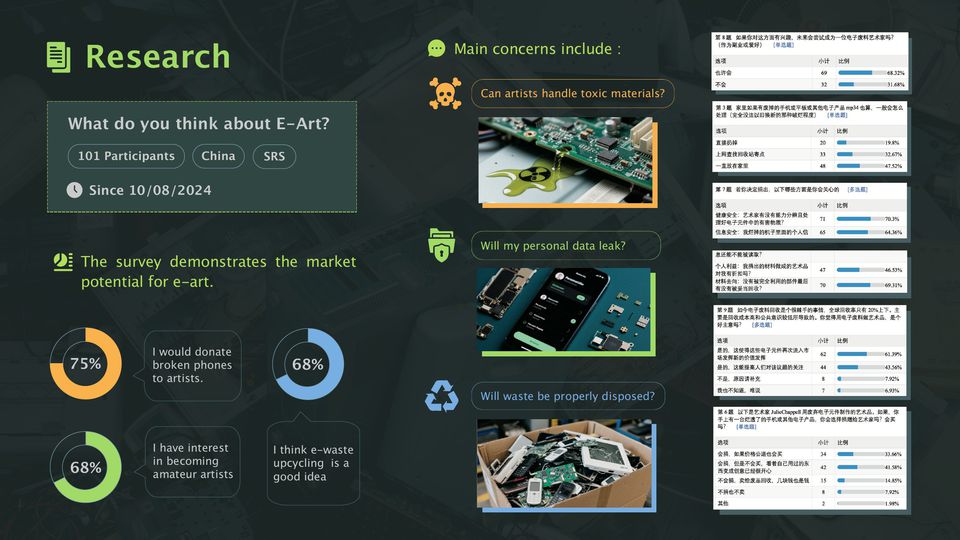
In a survey of 101 people in China, most respondents supported e-waste art, and three concerns stood out.
From 8 October 2024, I ran an online survey titled “What do you think about e-art?”. Of the 101 respondents, 75% said they would donate broken phones to artists, 68% thought e-waste upcycling is a good idea, and 68% were interested in becoming amateur artists.
Respondents raised three concerns: whether artists can handle toxic materials safely, whether personal data on a donated device could leak, and whether the remaining waste would be disposed of properly.
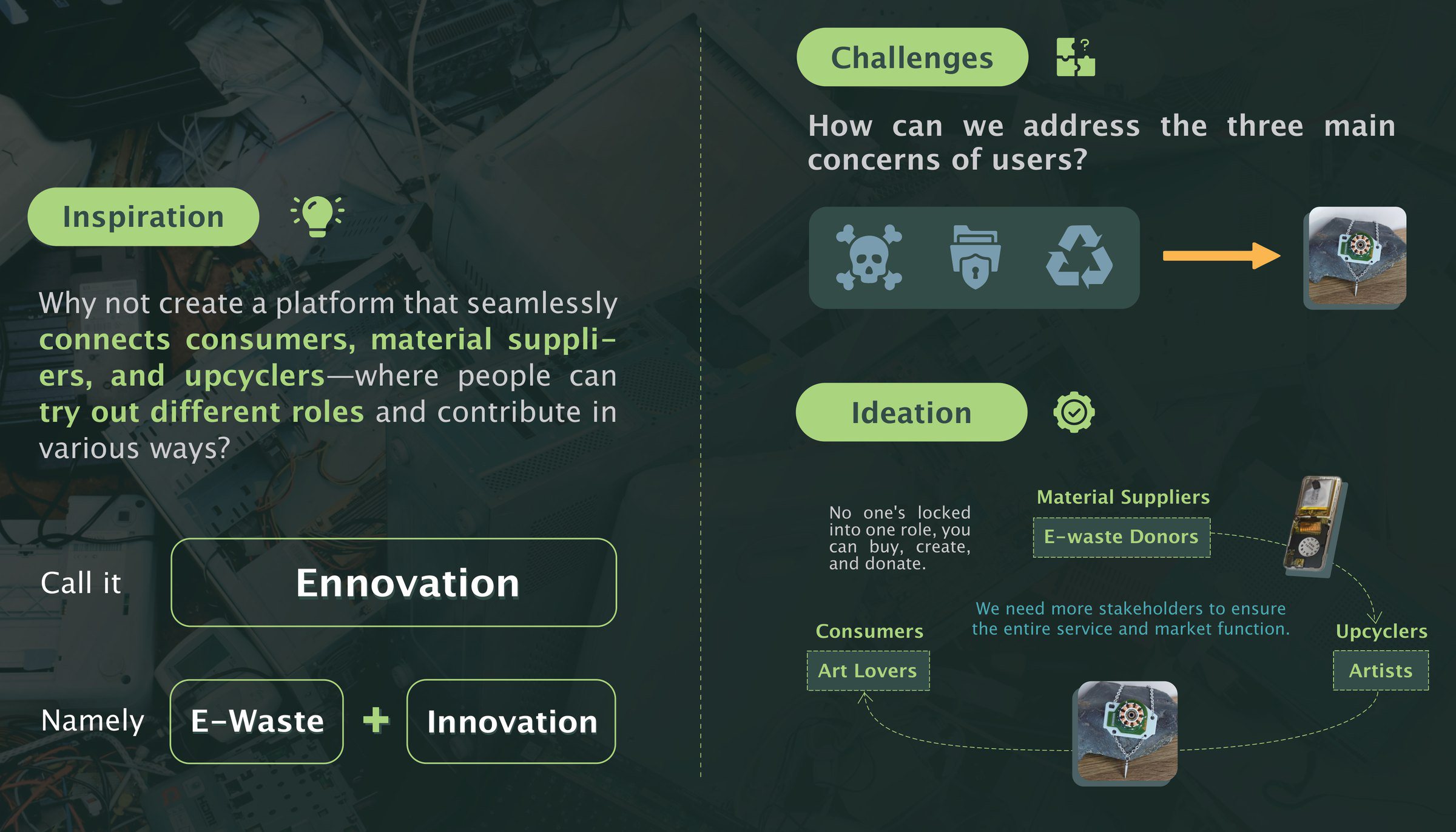
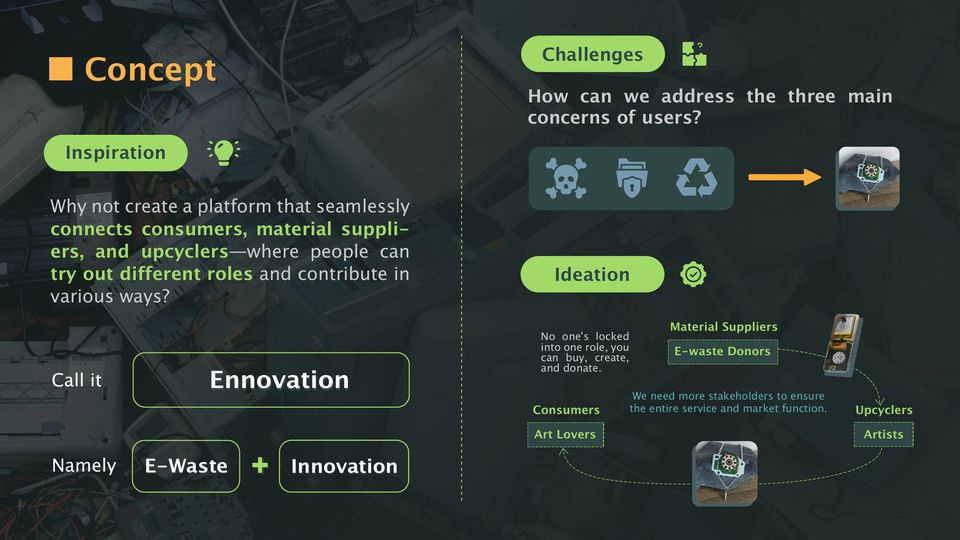
Ennovation connects consumers, material suppliers and upcyclers in one platform, and each user can take more than one role.
The name joins e-waste and innovation. No one is locked into one role: the same person can donate a device, buy an artwork or make one.
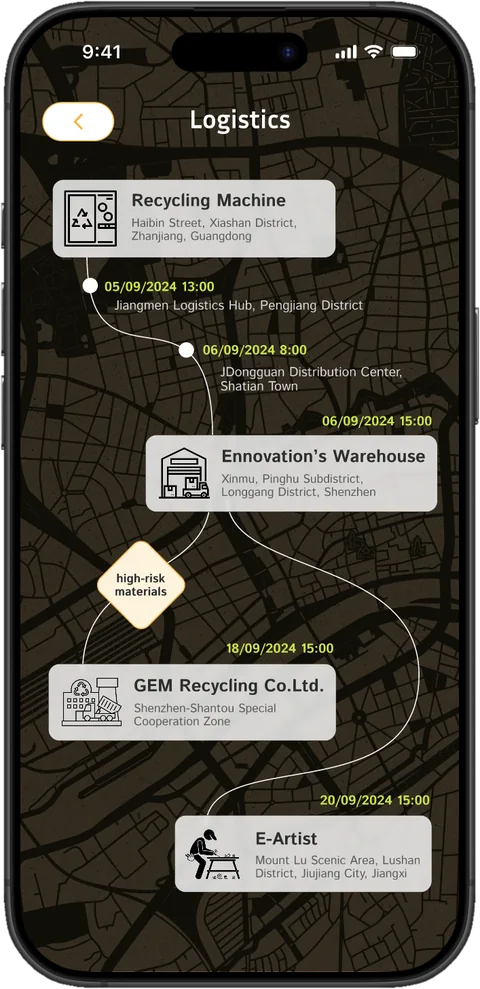
Each concern from the survey became a part of the service. Devices are cleared of personal information before artists receive them, toxic materials that artists cannot use go to large e-waste recyclers, and users can follow every donation in the app.
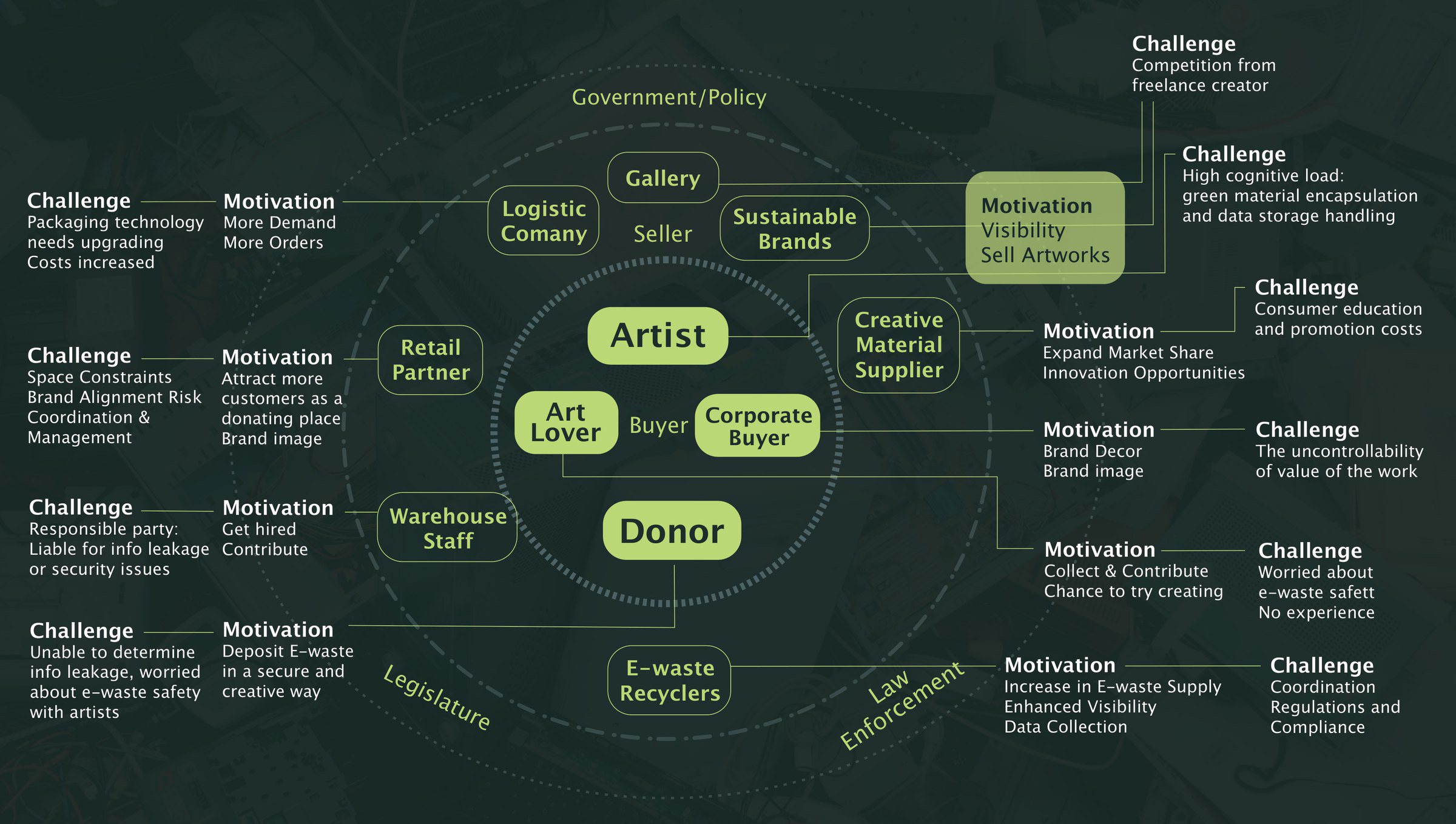
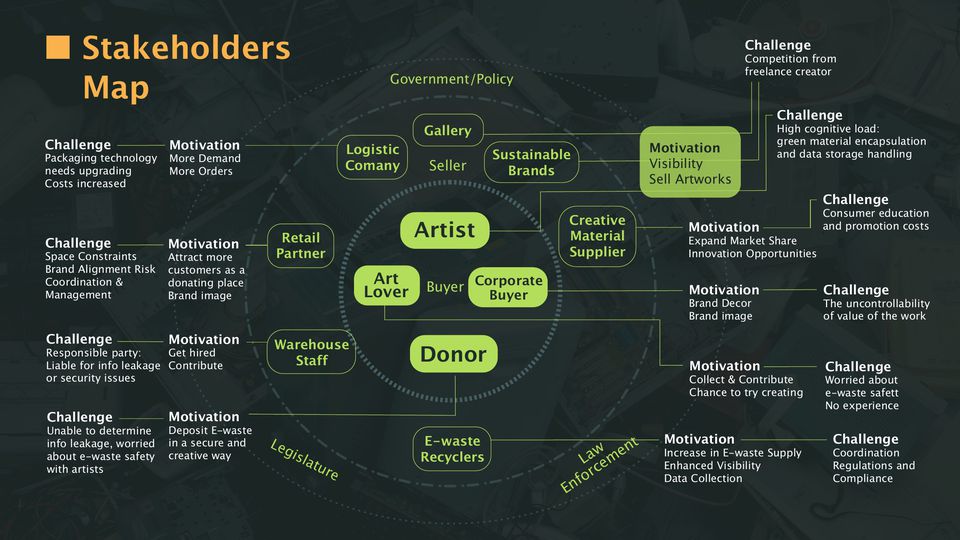
The stakeholder map places artists, donors and buyers at the centre, with the partners who keep the service running around them.
Around the core roles are galleries, sustainable brands and logistics companies on the selling side, art lovers and corporate buyers on the buying side, and retail partners, warehouse staff, creative material suppliers and e-waste recyclers in operations. Government policy, legislation and law enforcement frame the whole system.
For each stakeholder, the map records a motivation and a challenge. Logistics companies gain more orders but need better packaging; retail partners attract customers by hosting a donation point but face space constraints and brand alignment risk.
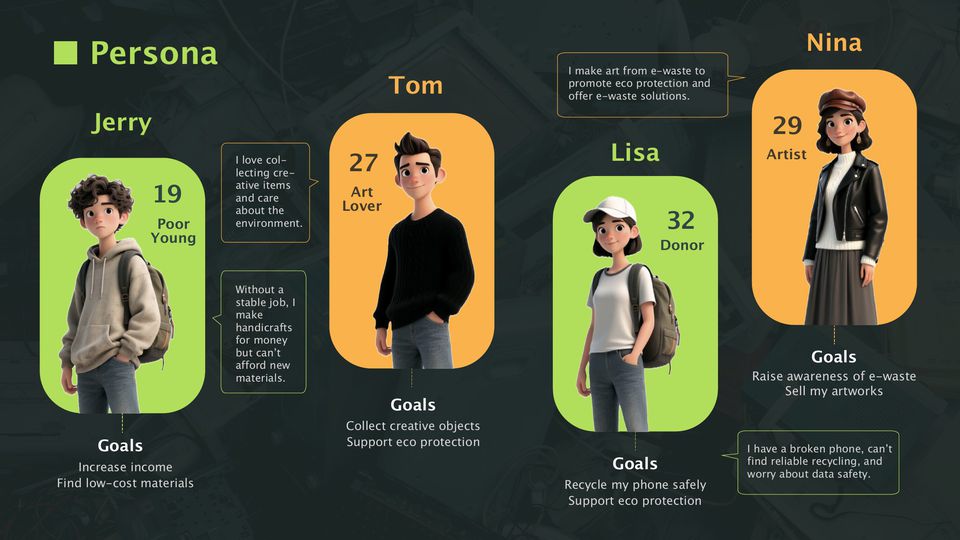
Four personas represent the main ways of taking part: a young maker on a low income, an art lover, a donor and an artist.
Each persona has a goal the service has to meet, from finding low-cost materials to recycling a phone without risking personal data.
Jerry
 19Young,
low income
Without a stable job, I make handicrafts for money but can’t afford new materials.
GoalsIncrease income
Find low-cost materials
Tom
 27Art
lover
I love collecting creative items and care about the environment.
GoalsCollect creative objects
Support eco protection
Lisa
 32Donor
I have a broken phone, can’t find reliable recycling, and worry about data safety.
GoalsRecycle my phone safely
Support eco protection
Nina
 29Artist
I make art from e-waste to promote eco protection and offer e-waste solutions.
GoalsRaise awareness of e-waste
Sell my artworks
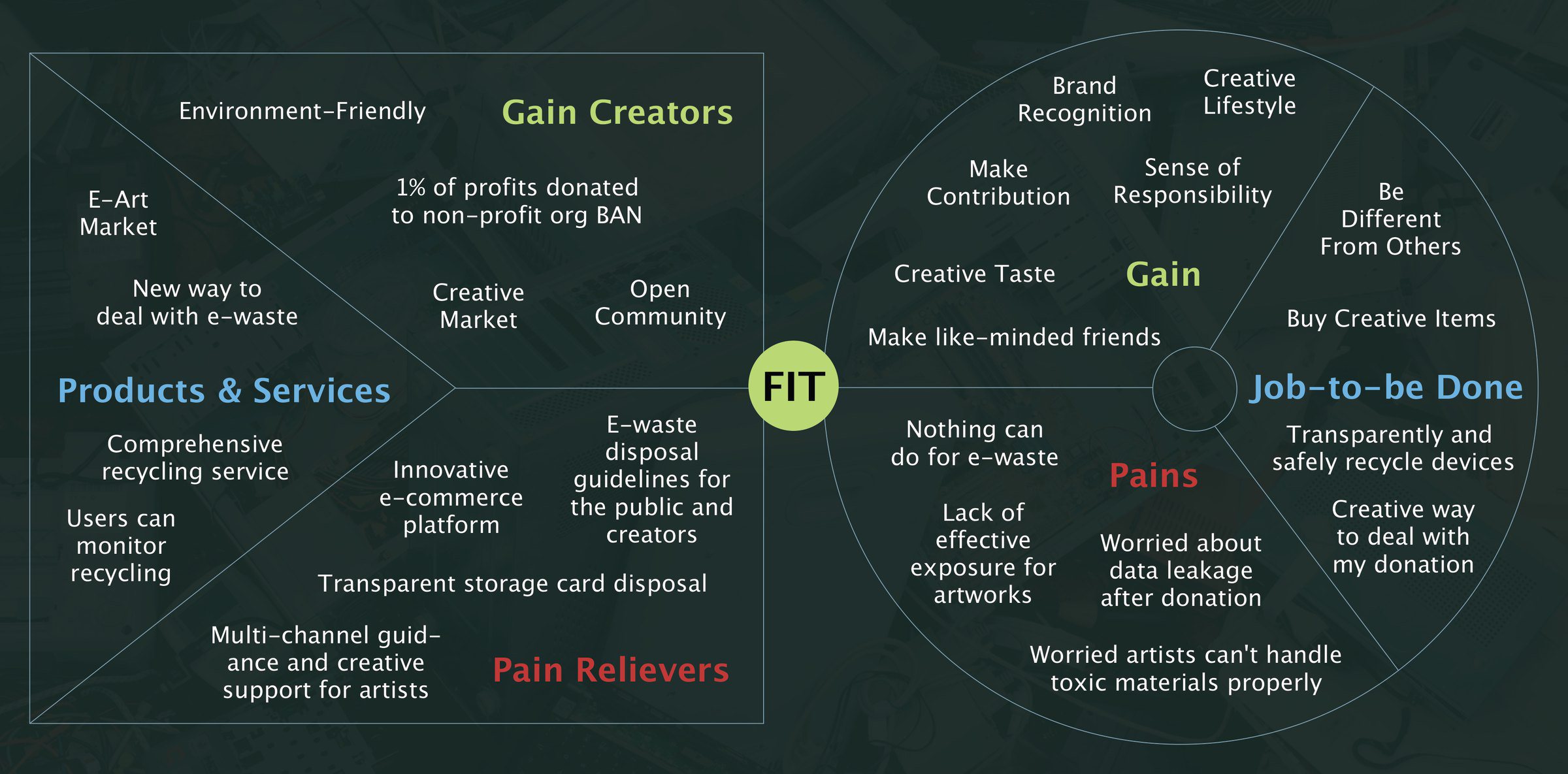
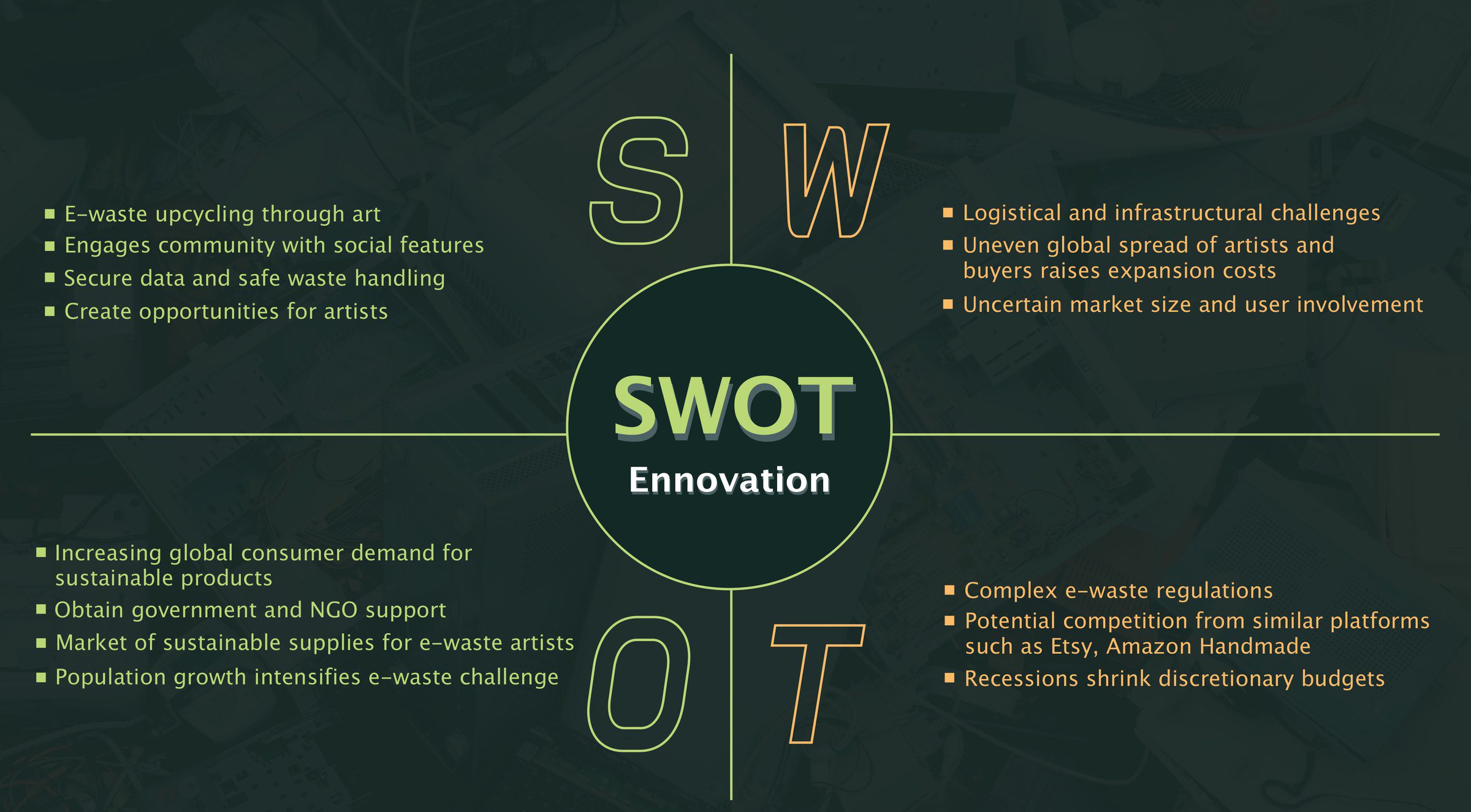
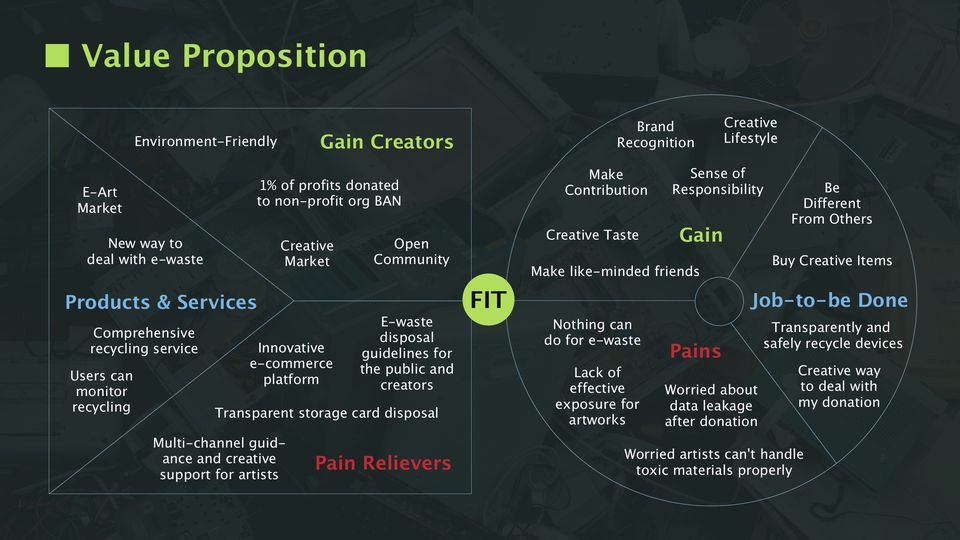
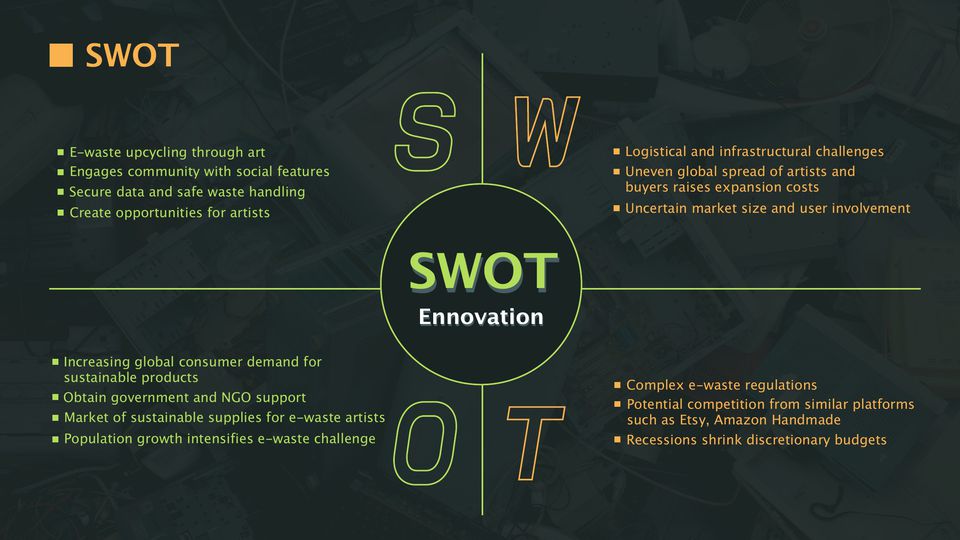
A value proposition canvas and a SWOT analysis tested what the service offers each user and what could stop it.
The value proposition canvas matches what users need with what the platform offers. Donors want to recycle devices transparently and safely and worry about data leaks after donation, so the service offers a full recycling service that users can monitor and transparent disposal of storage cards. Artists lack exposure for their work and buyers look for creative items; the marketplace and the open community serve both.
The SWOT analysis found the main threats in complex e-waste regulations, competition from platforms such as Etsy and Amazon Handmade, and recessions that shrink discretionary budgets.
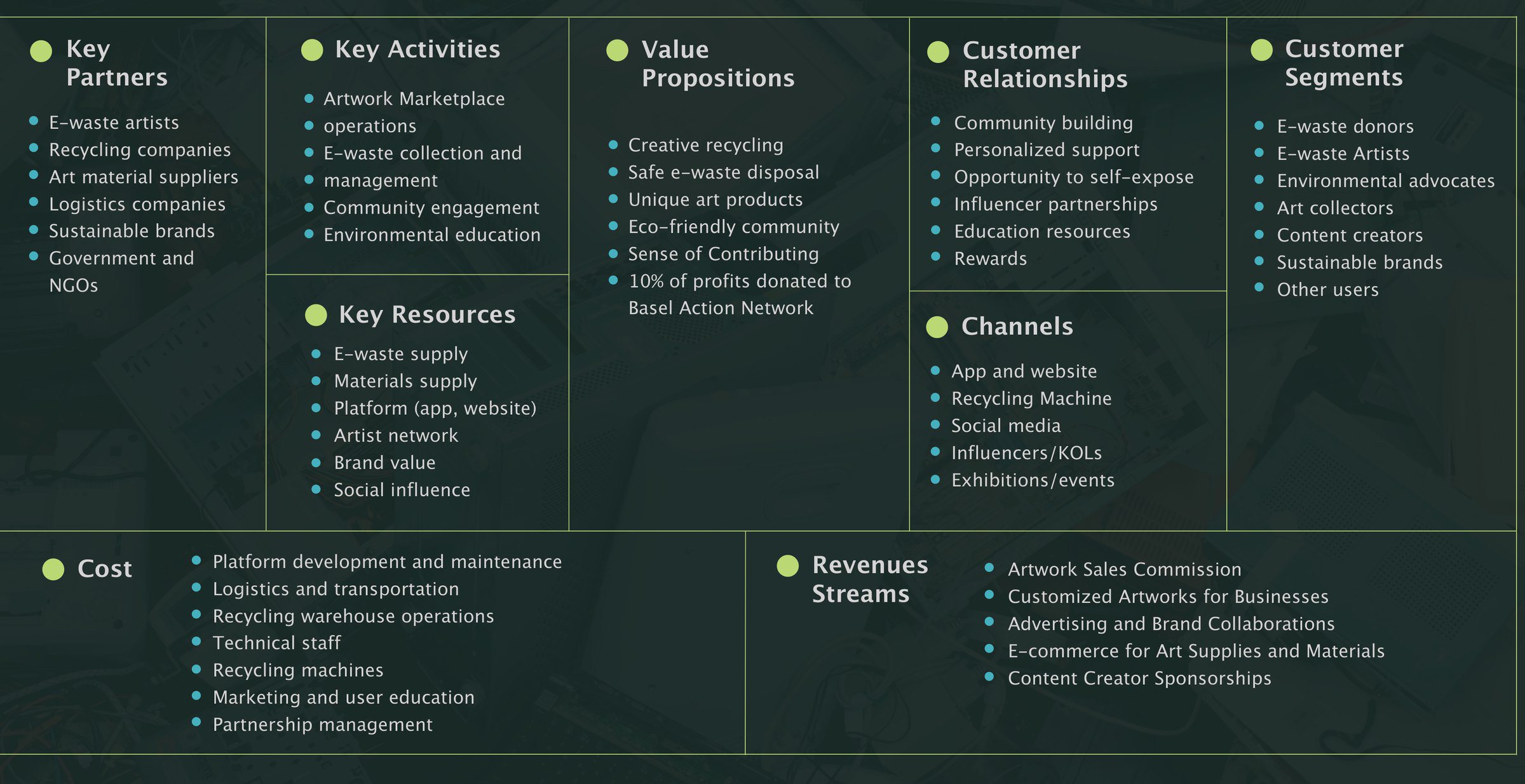
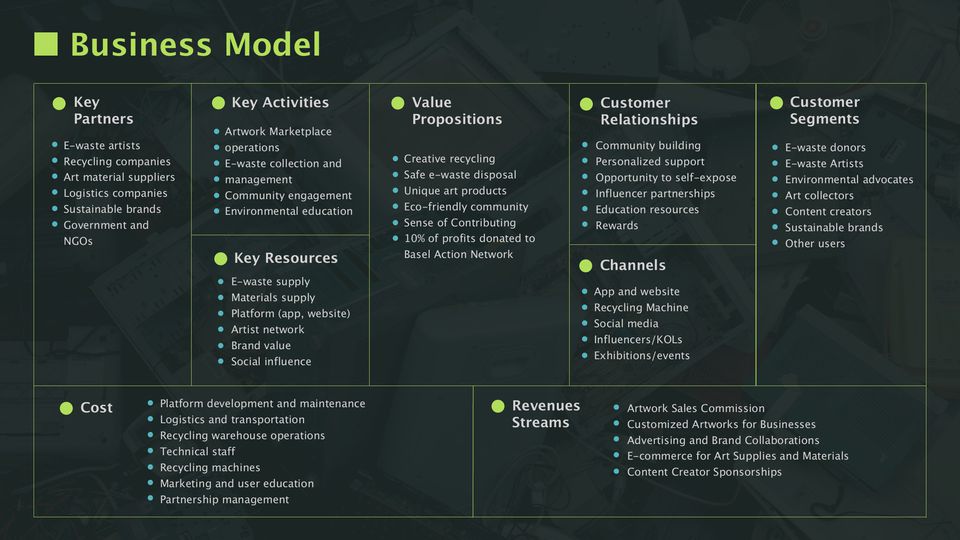
Revenue comes from commissions and from the businesses around the art, and part of the profits goes to an e-waste non-profit.
In the business model canvas, revenue comes from commissions on artwork sales, custom artworks for businesses, advertising and brand collaborations, sales of art supplies and materials, and creator sponsorships. The main costs are the platform, logistics, warehouse operations, recycling machines and technical staff.
Part of the profits is donated to the Basel Action Network, a non-profit organisation that works on the global e-waste trade.
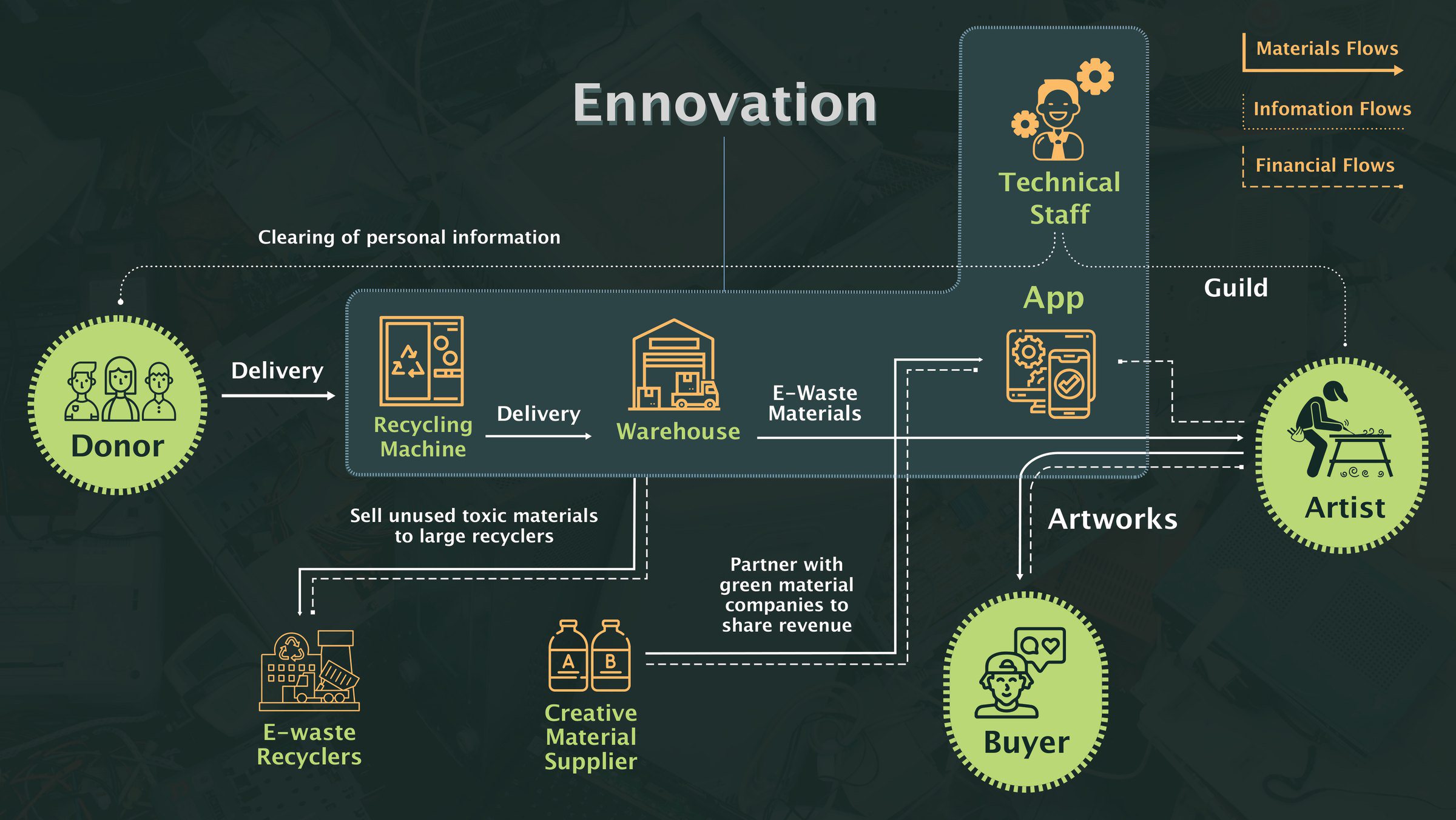
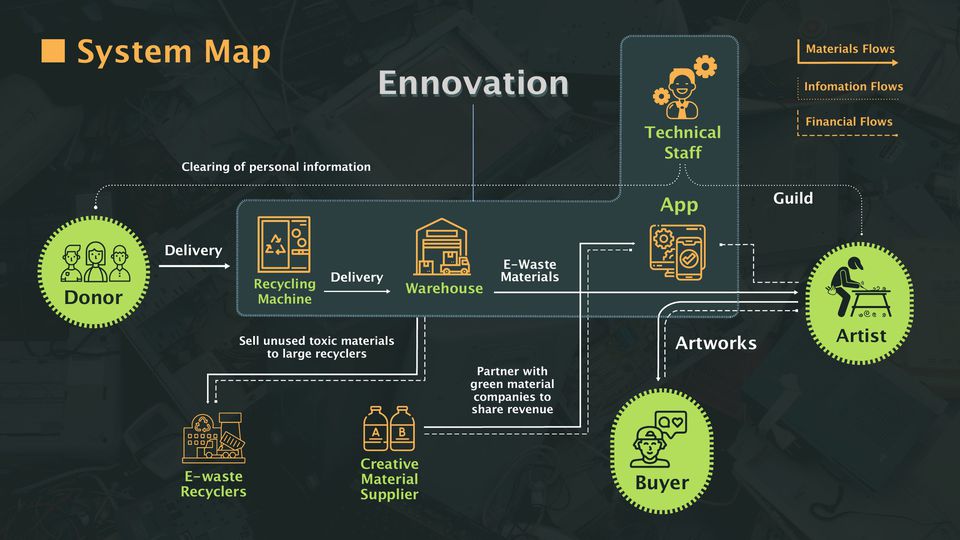
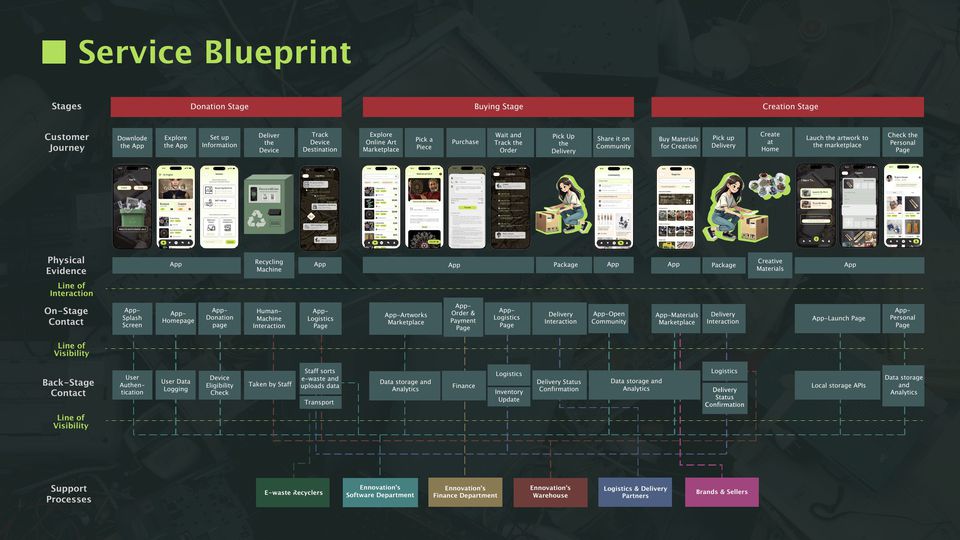
The system map and the service blueprint follow a device from donation to a finished artwork with a buyer.
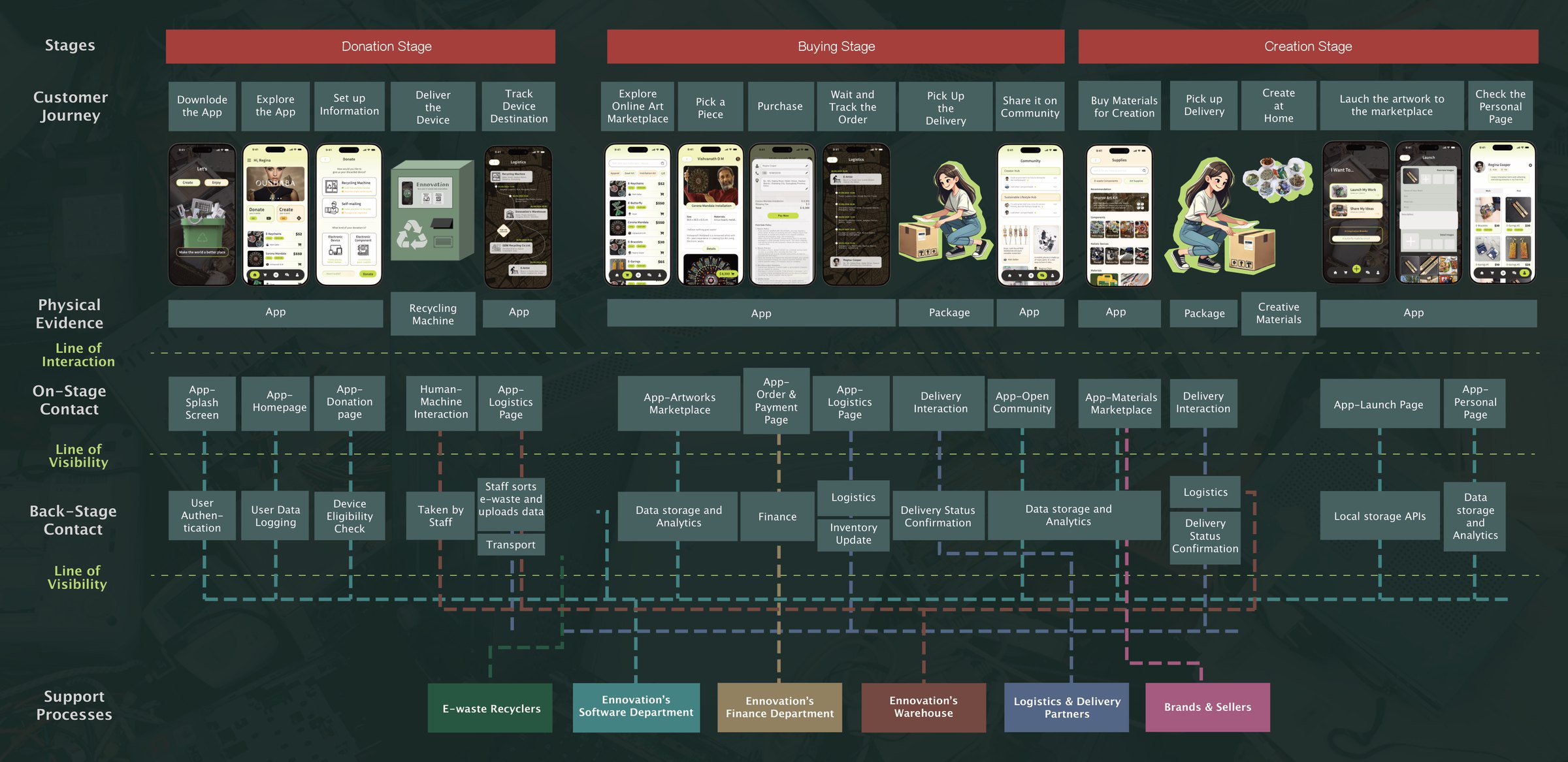
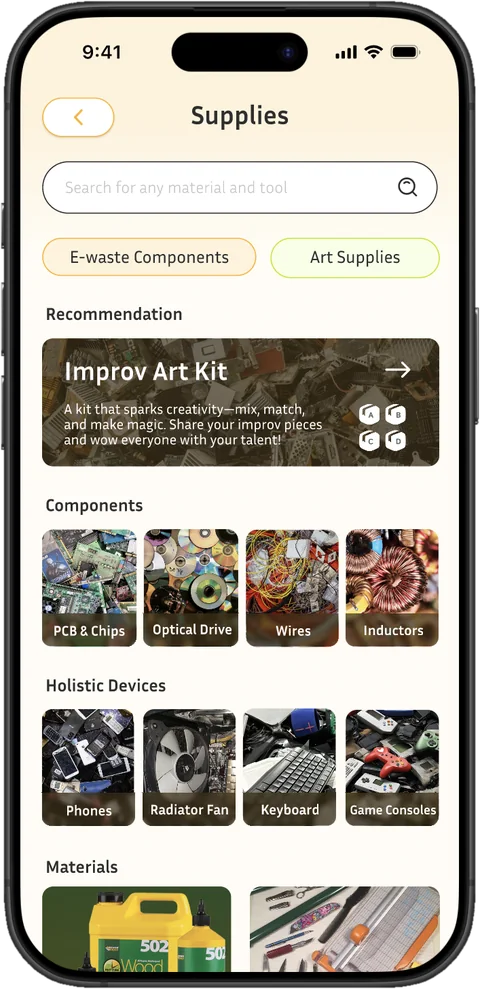
Donors bring devices to a recycling machine or send them by delivery. The devices go to the Ennovation warehouse, where personal information is cleared, and the materials appear in the app for artists. Toxic materials that artists cannot use are sold to large e-waste recyclers, and green material companies share revenue as partners. Artists sell their works to buyers through the app, and technical staff maintain the platform.
The service blueprint lays out three stages: donation, buying and creation. For each step it shows the customer’s action, the physical evidence, the contact in the app or at the recycling machine, the back-stage work such as user authentication, device eligibility checks and data storage, and the departments and partners that support it.
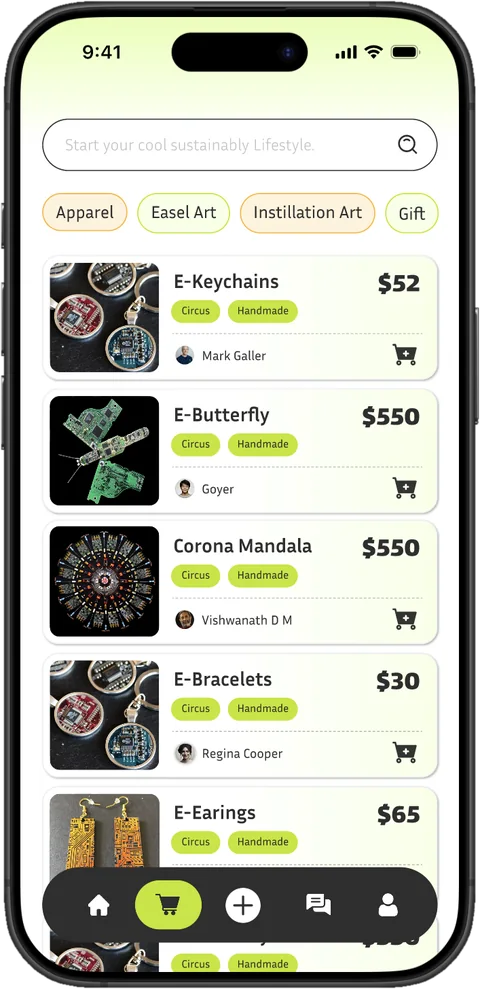
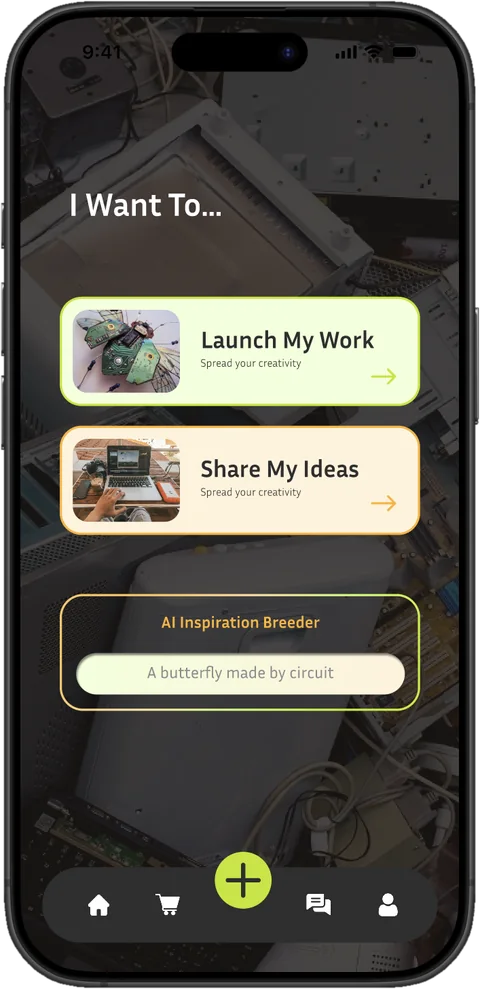
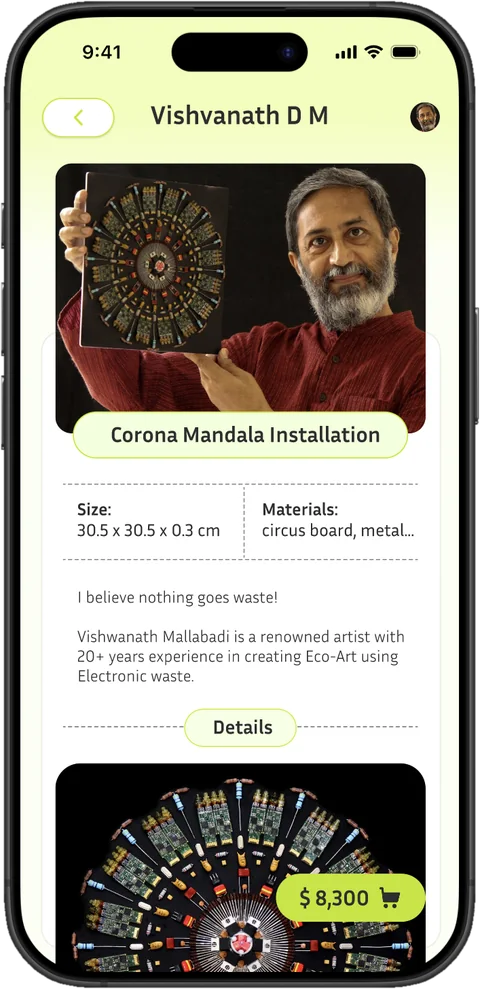
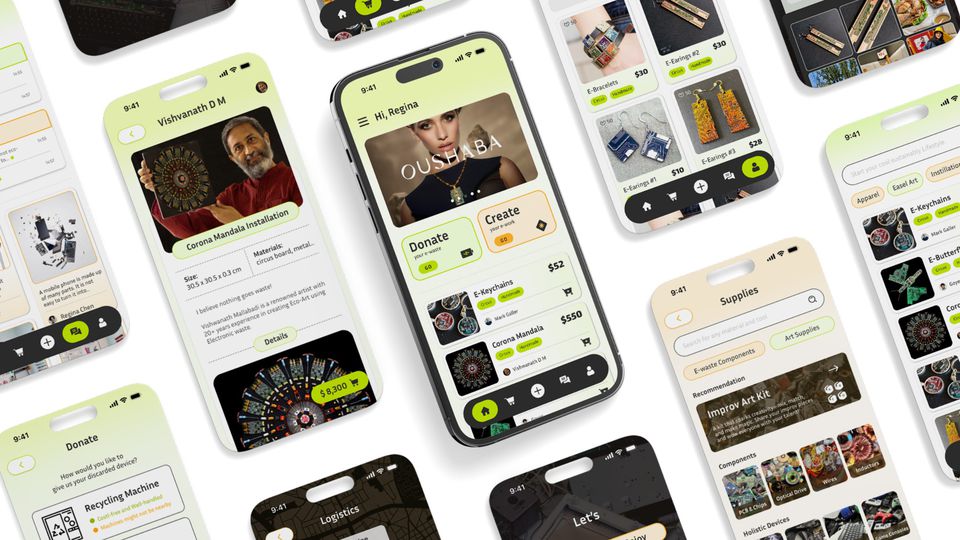
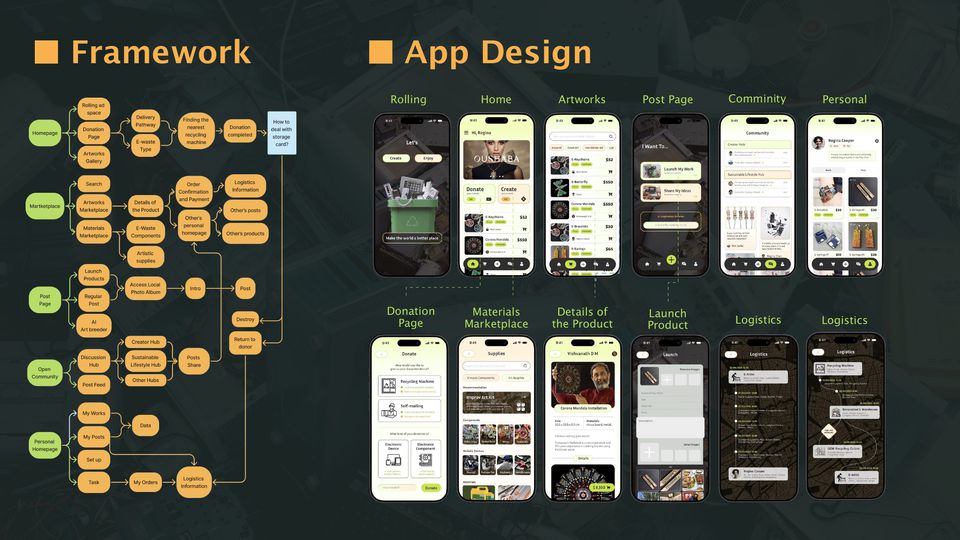
The app gives each role its own entry: donating a device, buying materials or artworks, and launching a work.
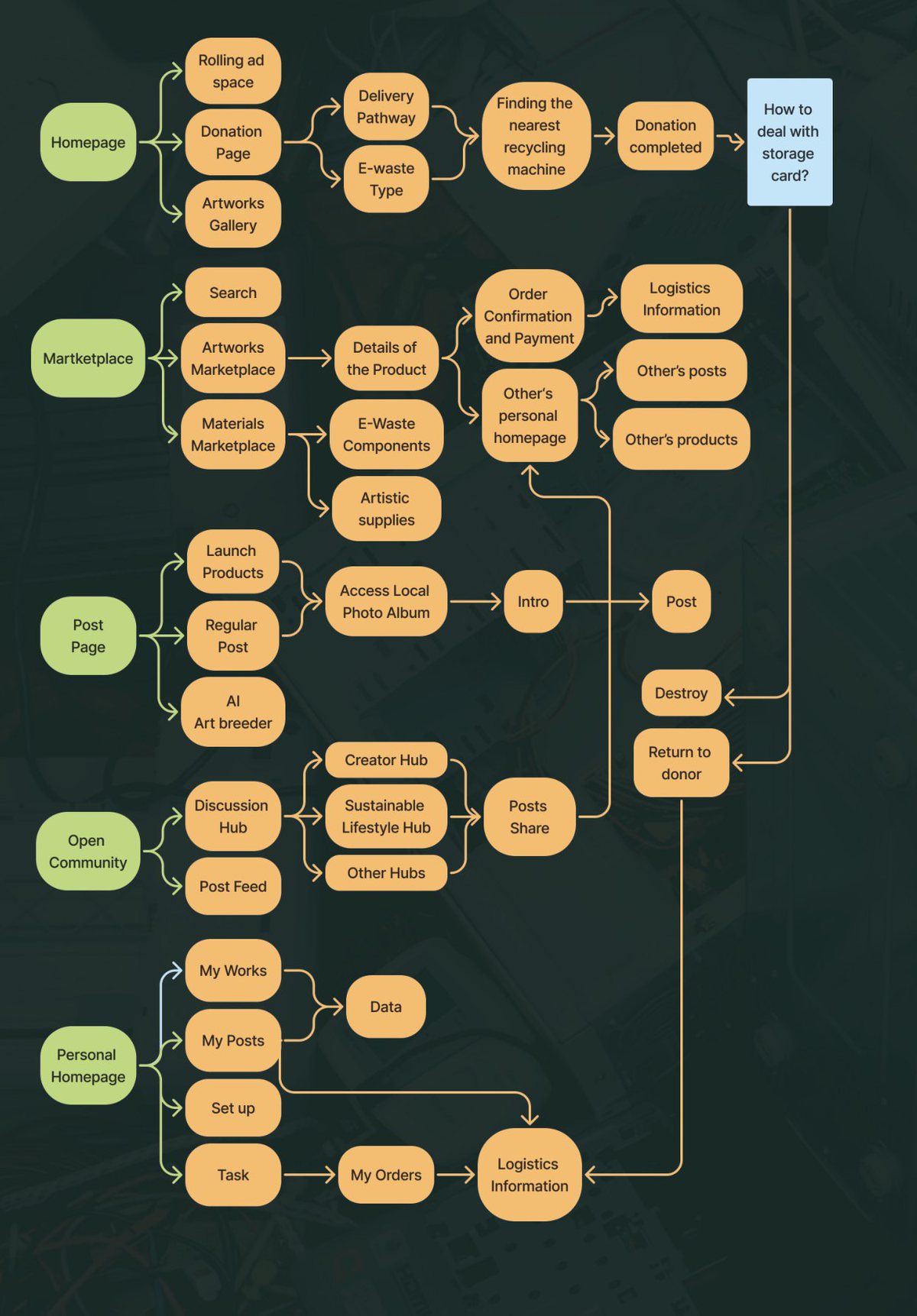
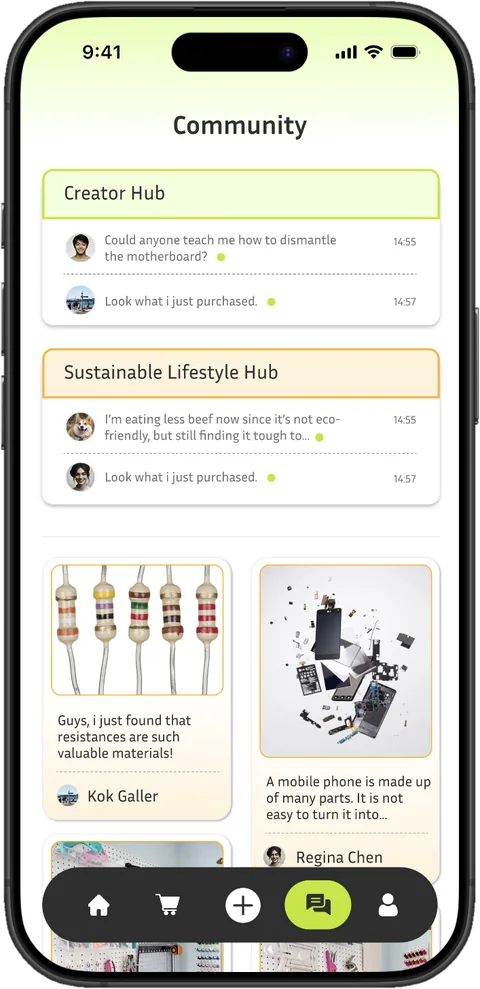
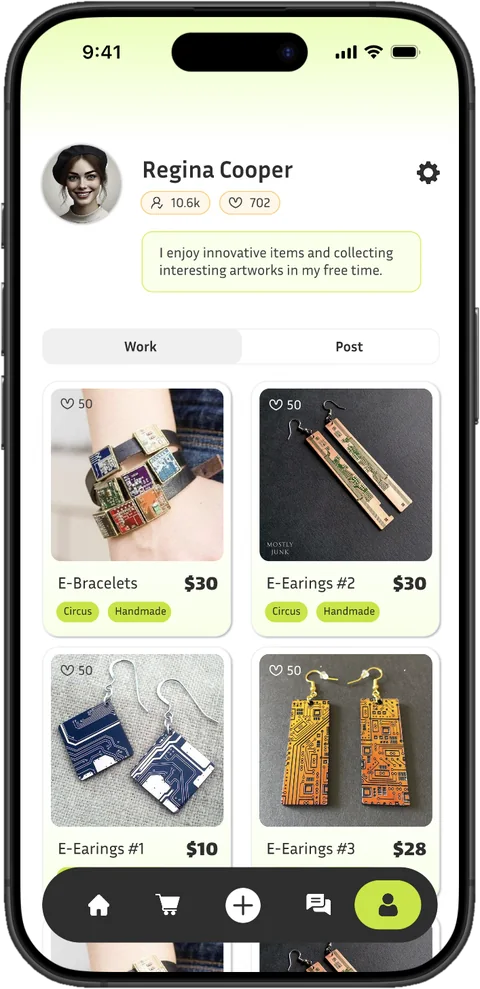
The framework organises the app into five areas: the homepage, the marketplace, posting, the open community and the personal homepage.
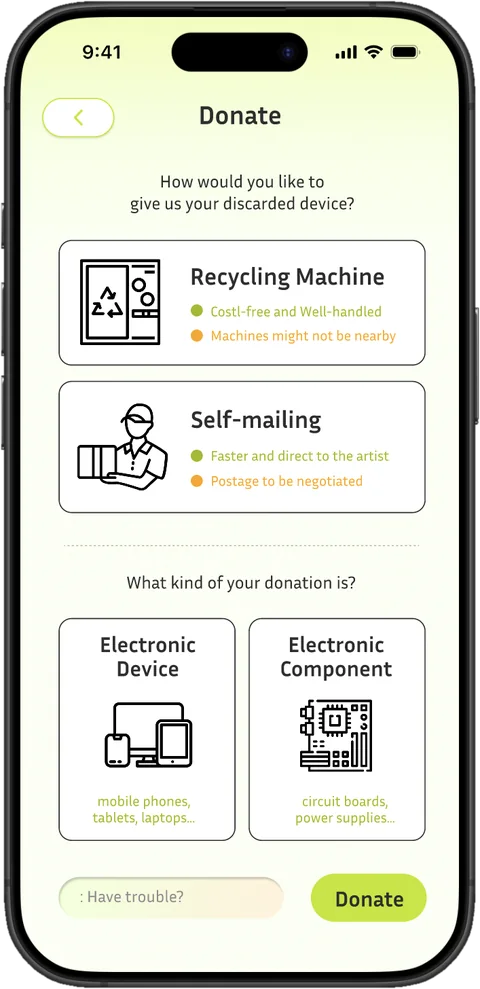
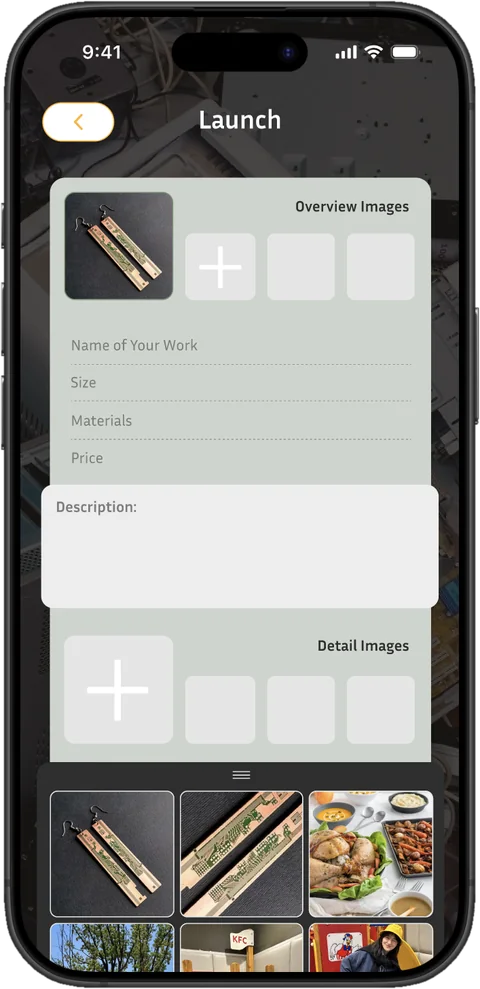
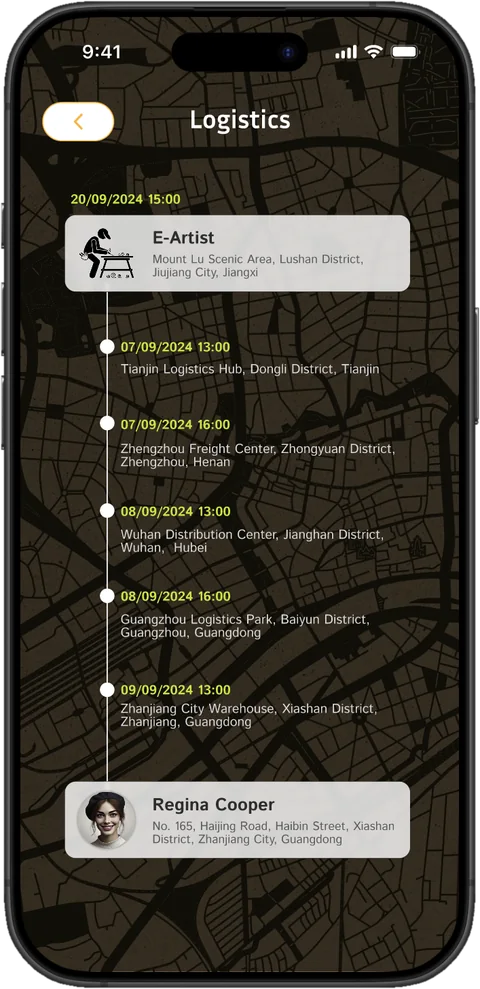
On the donation page, users choose between a recycling machine, which is free but may not be nearby, and self-mailing, which goes directly to an artist. The logistics pages show each step of a delivery, including the transfer of high-risk materials to a recycler. Artists launch a work with images, its size, its materials and a price.
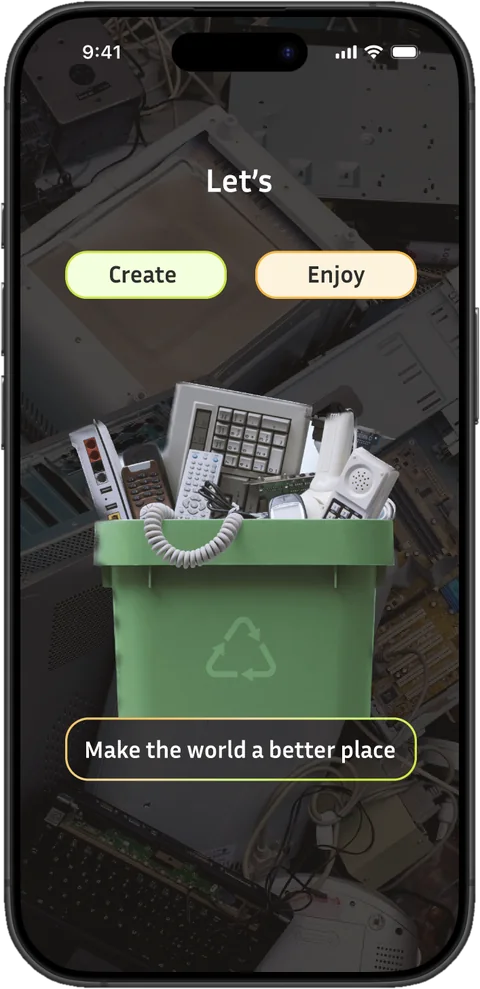
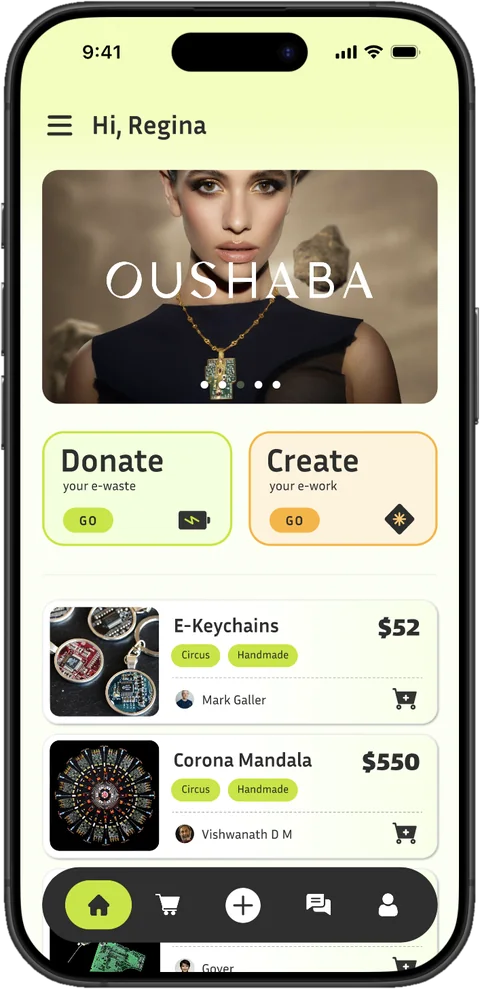
The full case study deck, page by page.
Each page opens at full size, and the arrows move through the deck.
Ennovation case study13 pages · PDF · 10.8 MB
Open the PDF