Stability
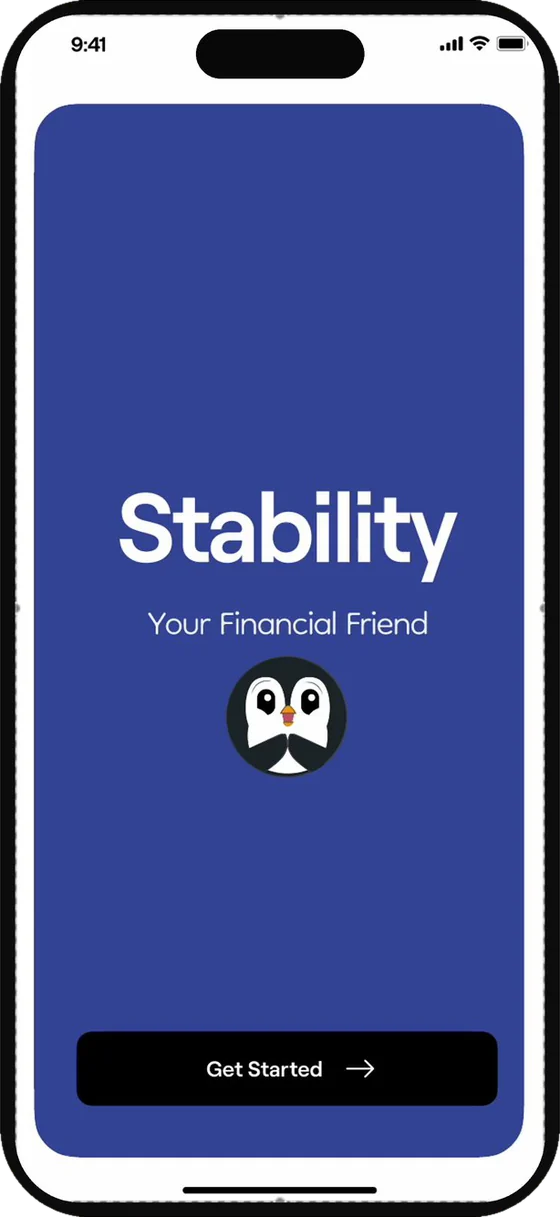
Stability is a financial wellness app for young Canadians who avoid looking at their money. A penguin named Penny helps users set a goal, turn it into small daily saving habits, and start investing once those habits are in place.
- Context
- Manulife × Rotman Design Challenge 2026
- Recognition
- Best Prototyping and Best Storytelling
- Timeline
- January – March 2026
- Team
- Sienna Chen, Deeksha Walimbe, Emma Nakashin and Kashish Parmar, Parsons School of Design
- Role
- Co-led the research and the pitch, designed the flows and high-fidelity screens, and built the coded prototype
- Prototype
- Open the web prototype ↗
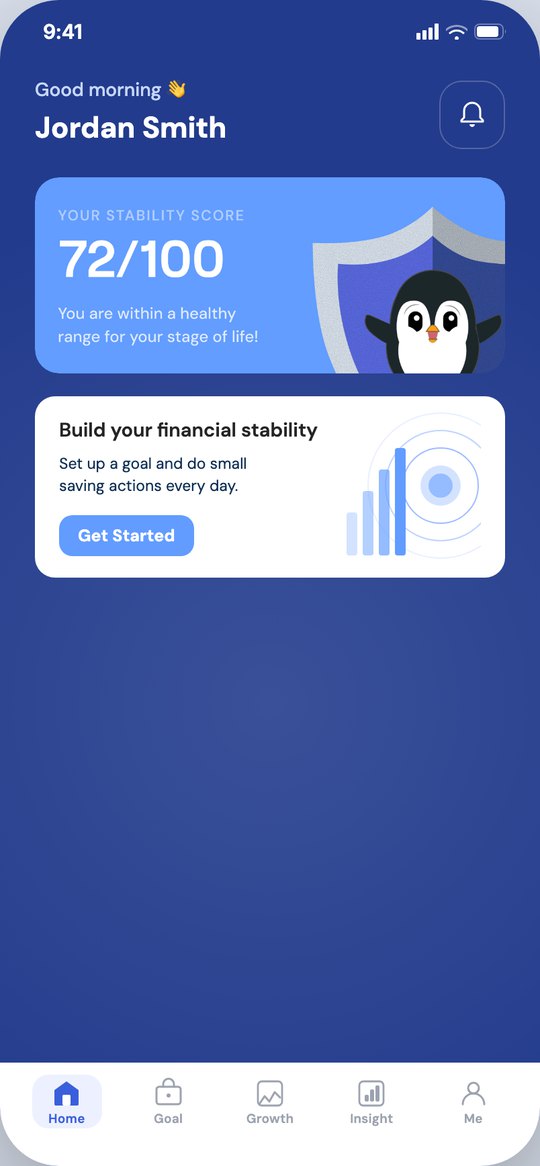
The phone below runs the high-fidelity prototype I built as a web app for the pitch.
- Tap Get Started and set a goal. Pick an icon, then give it a title, a target and a deadline.
- Under Your Micro Habits, tap Get Started. Add daily habits and check one off.
- Open Growth and Insight from the tab bar.
Many young Canadians avoid looking at their money, because it makes them anxious.
The Manulife × Rotman Design Challenge 2026 asked how Manulife could help Canadians make everyday choices for their long-term physical, mental and financial well-being. We chose financial well-being for students and young professionals. In 2025, 35% of Canadians reported financial stress on most days, according to FP Canada, and younger Canadians report the most stress and the least confidence.
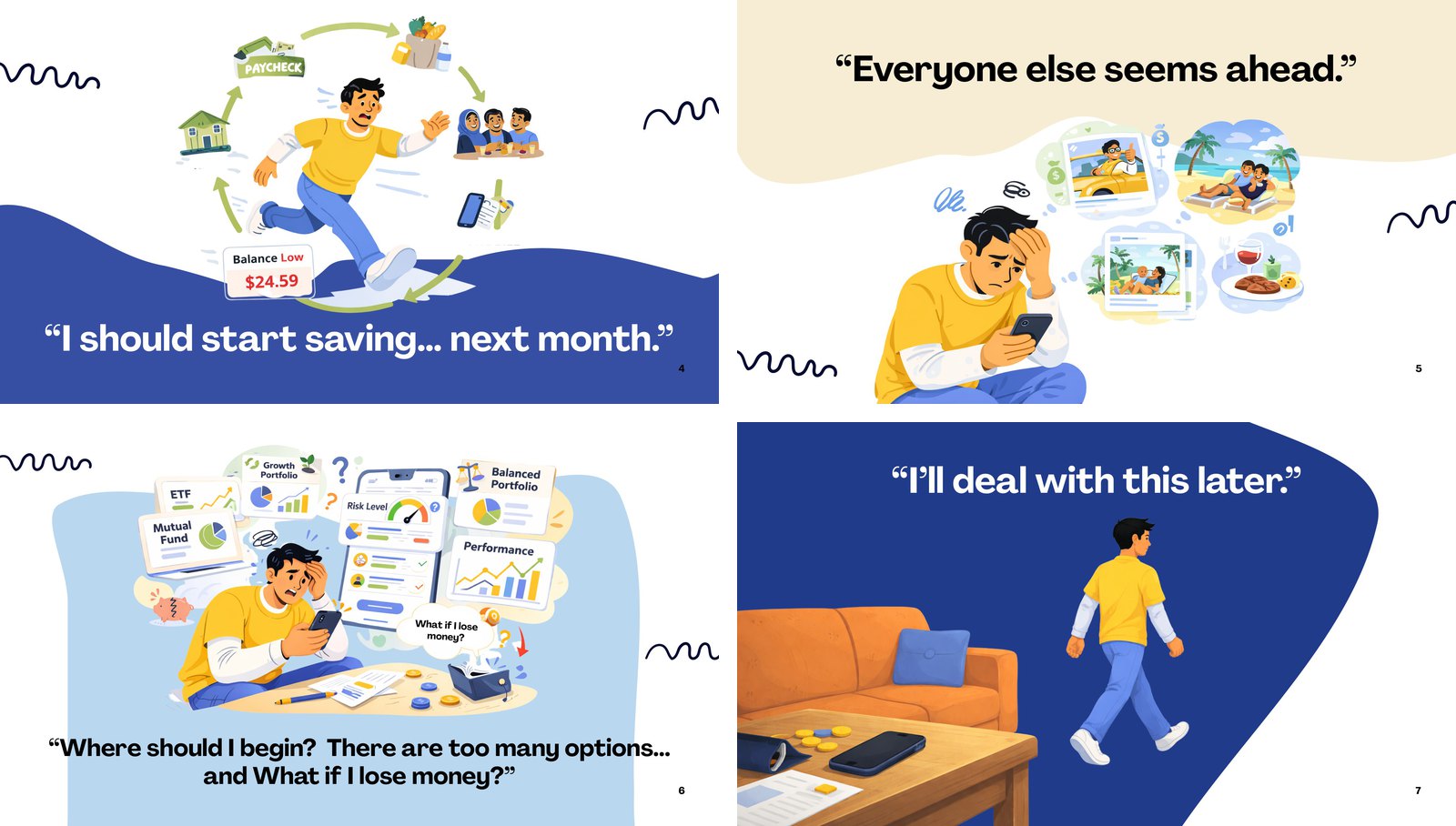
The pitch followed Jordan, 23 and in his first full-time job. Present bias moves saving to next month, social comparison makes him feel behind, and too many options and the fear of loss stop him from starting, so he puts it off. Behavioural researchers call this financial avoidance.
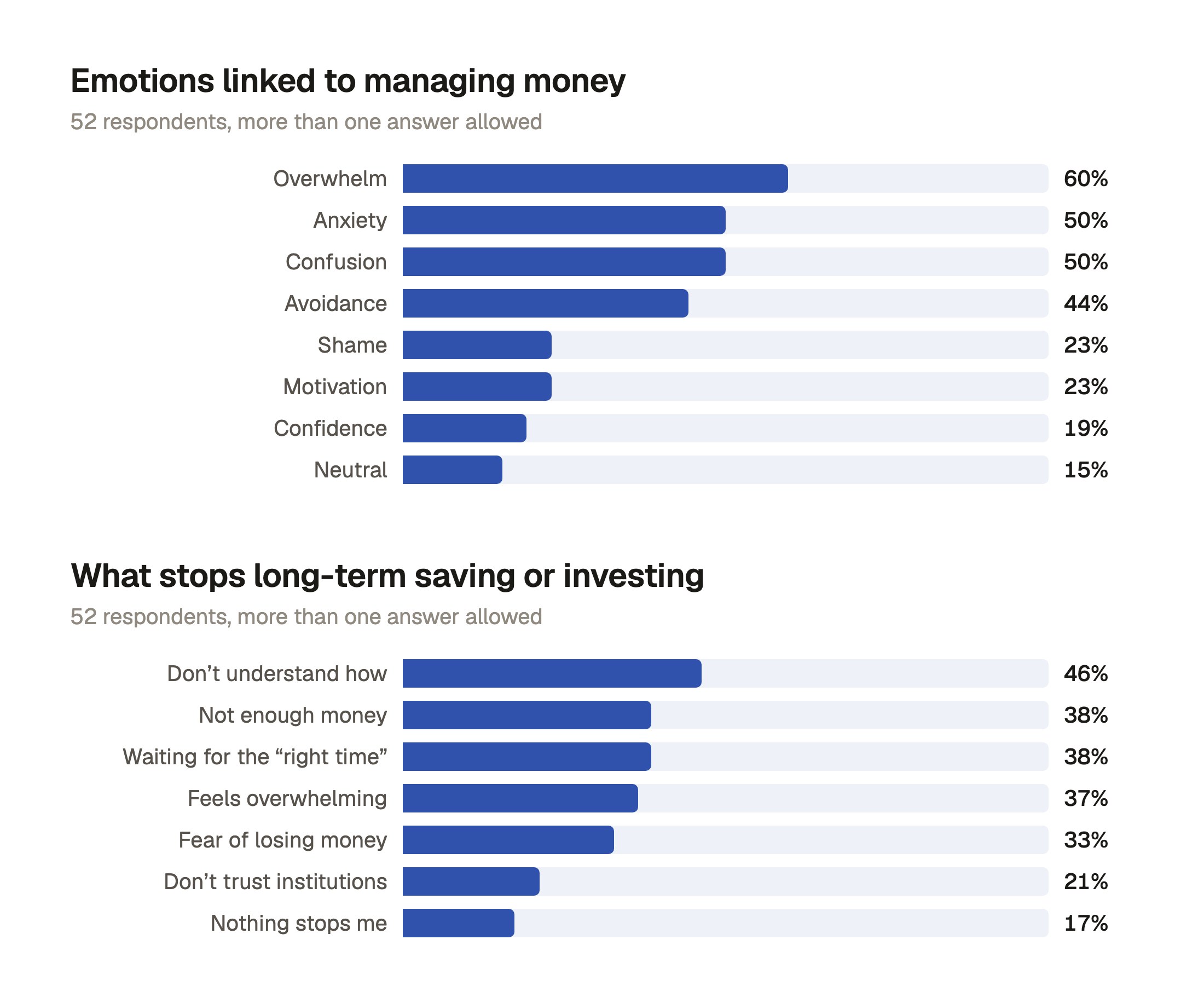
We surveyed 52 young adults and interviewed four, and their answers described fear more than missing knowledge.
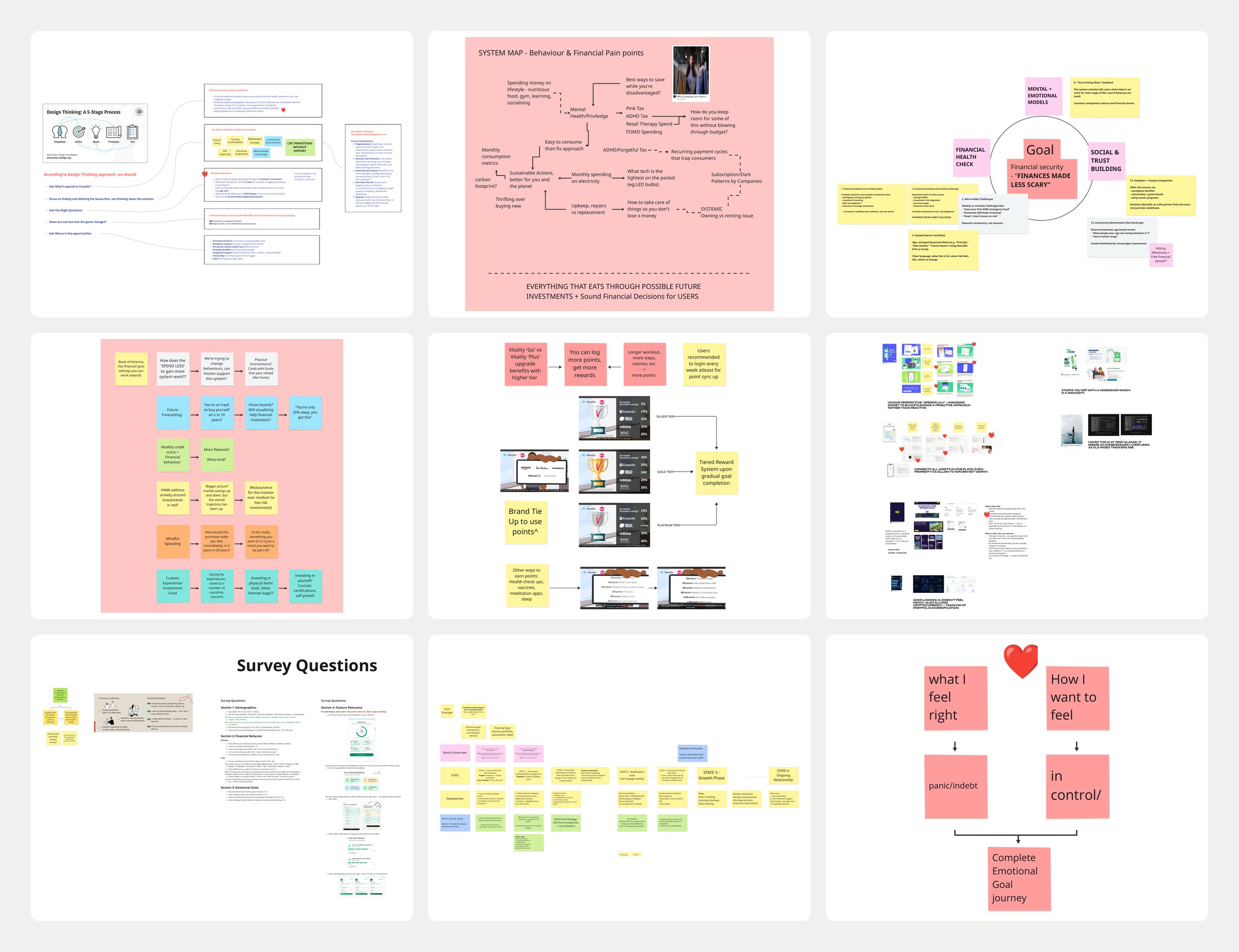
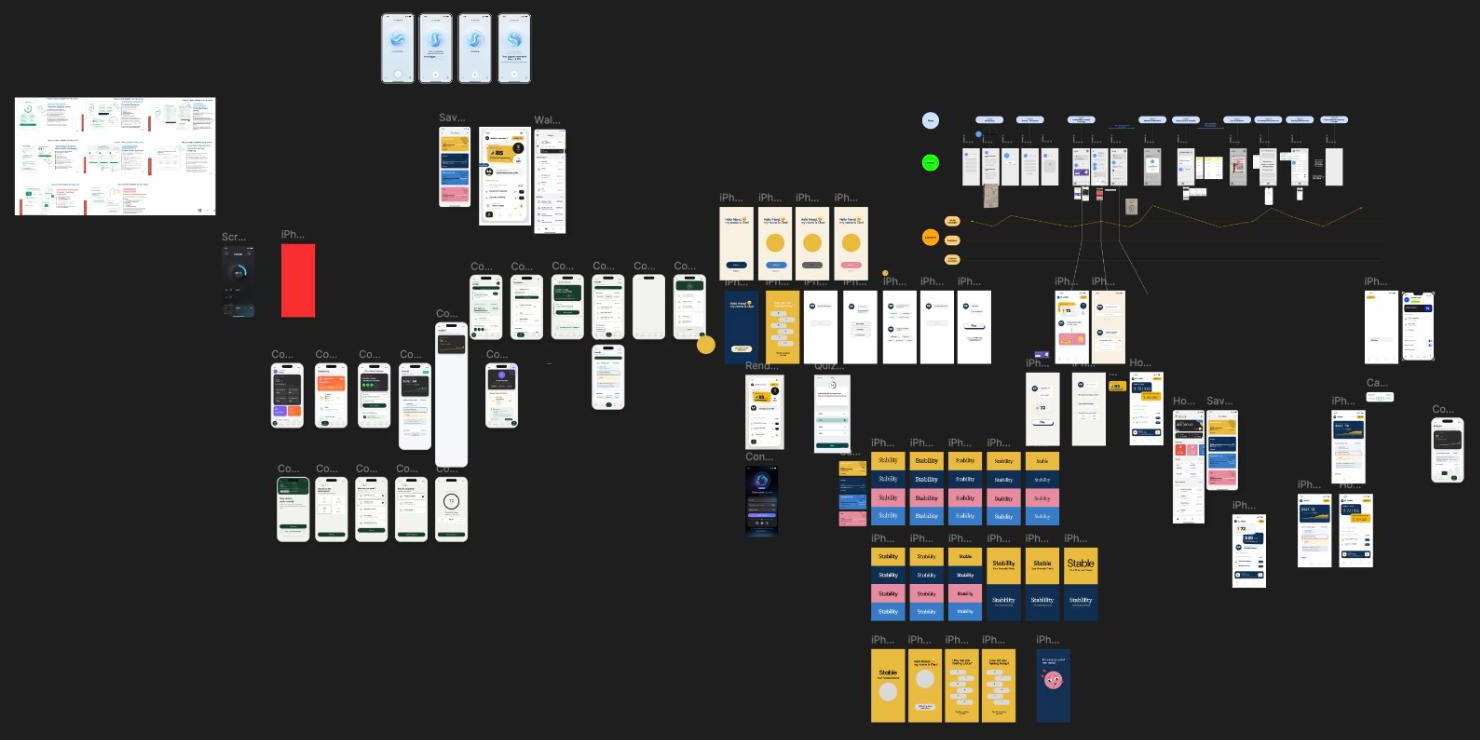
The team worked through the five stages of design thinking on a shared Miro board, from framing the problem and mapping behaviour and financial pain points to ideation and an emotional journey. I worked with Deeksha Walimbe on the competitive mapping and with Emma Nakashin on the primary research questions.
Overwhelm, anxiety and confusion were the emotions most linked to managing money, and the most common barrier was not knowing how to start. In interviews, people asked for fewer notifications, less gamification and an app that looks trustworthy.
The usual answer is more financial literacy. We designed for emotional safety and behavioural scaffolding instead, meaning small, structured steps that make the next action easy.
Users turned down game mechanics and plain progress tracking, so the final design reassures instead of scoring.
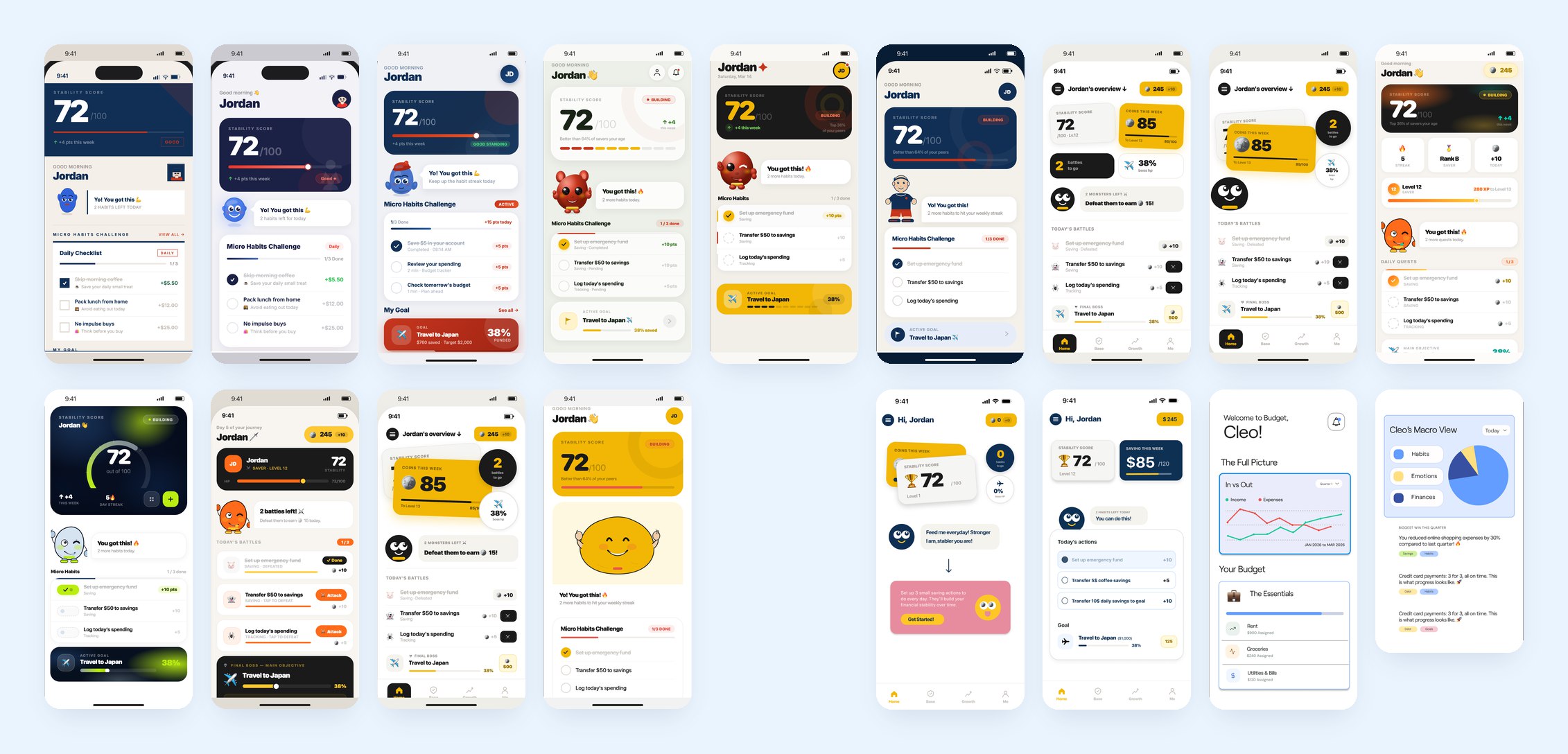
The first-round proposal in January applied Manulife Vitality, which rewards preventive health habits, to money. For the final round I coded fifteen home screens, from mascots and coins to levels, quests and boss battles. Users said gamification felt like an app trying to “game” their stress away, and called a calmer track of progress bars and milestones too clinical. The final design keeps the small daily actions, drops the points and adds a character.
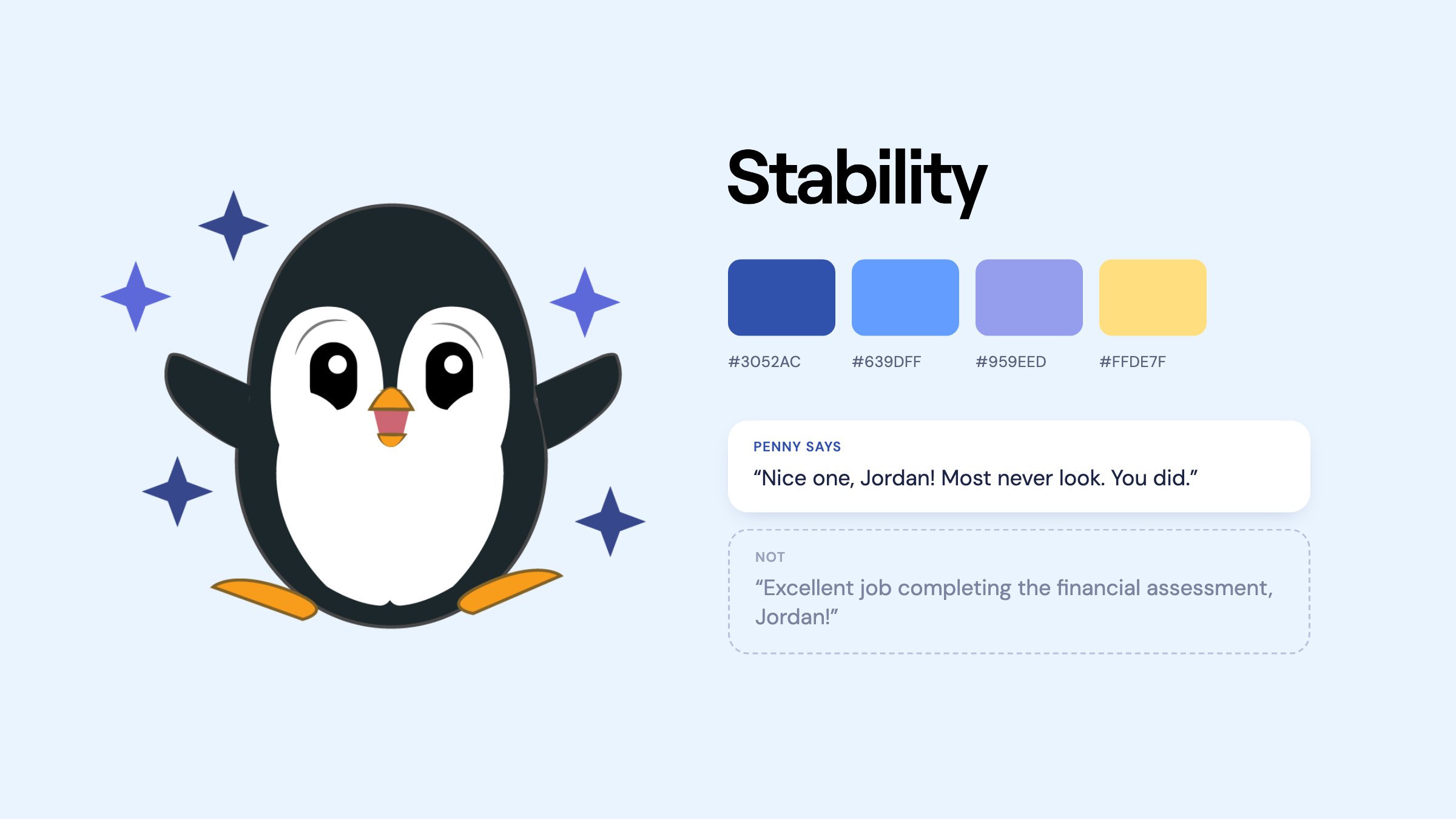
Penny, a penguin who knows harsh seasons, gives the app a calm voice that never judges.
Penny is a calm friend rather than a guru or a judge. Her voice follows four pillars, anti-shame, small wins, warmth over willpower and transparency, and the type is set in Roobert and DM Sans.
The app starts from how users feel about money, builds small daily habits, and opens investing once the habits hold.
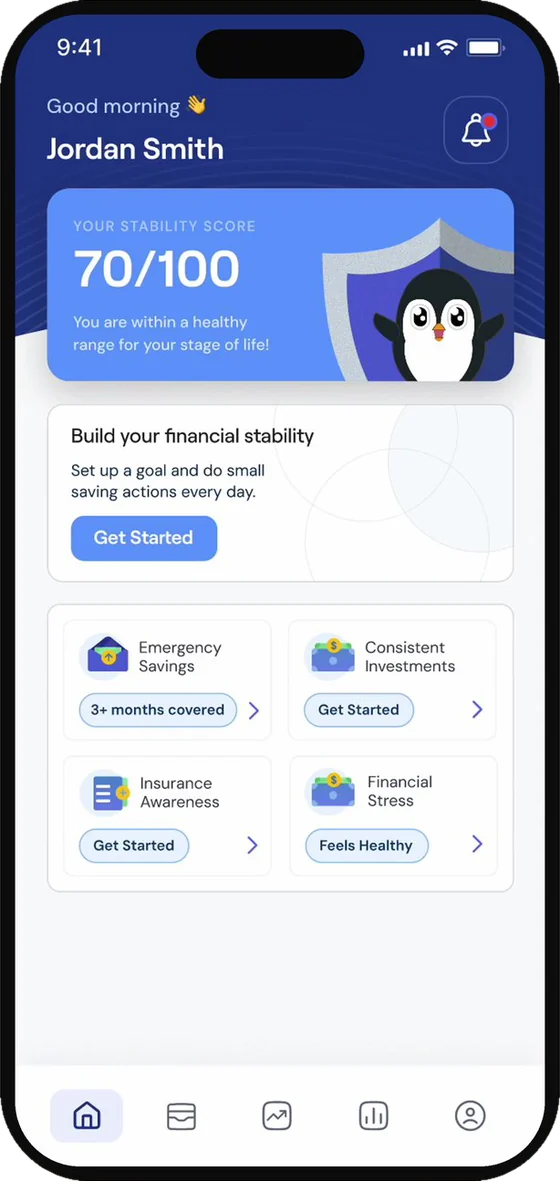
Penny introduces the check-in, which asks how the user feels about money, what they do with it and where they want to be. The Stability Score out of 100 adds four pillars of 25 points, awareness, safety, habits and growth, so it measures habits rather than the balance. 78% of respondents to a prototype survey found such a score useful. Home shows the score and four signals: emergency savings, investing, insurance awareness and financial stress.
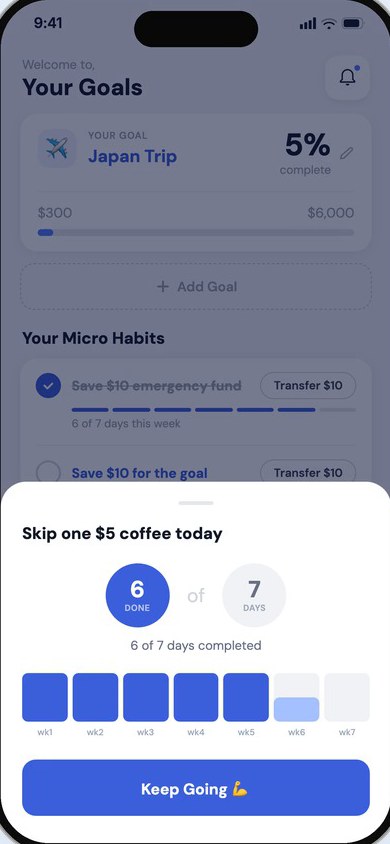
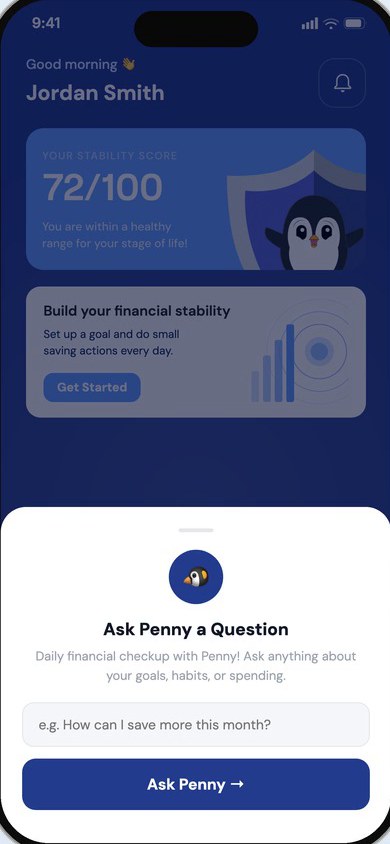
A goal has an icon, a title, a target and a deadline. Users accept recommended habits or write their own, then check them off each day to fill a weekly bar. Penny celebrates streaks, suggests a break instead of a warning when a user falls behind, and answers questions about goals and spending.
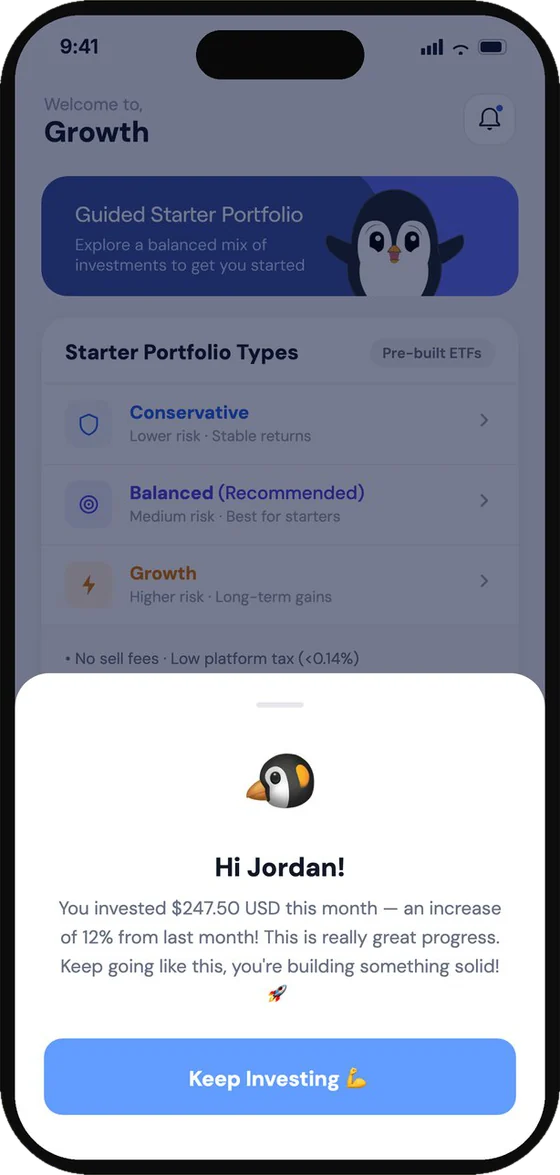
Growth offers conservative, balanced and growth portfolios of exchange-traded funds (ETFs), each described by its risk and purpose in one line. Penny reports each month and explains market dips as normal.
Notifications are limited to nudges and a weekly summary.

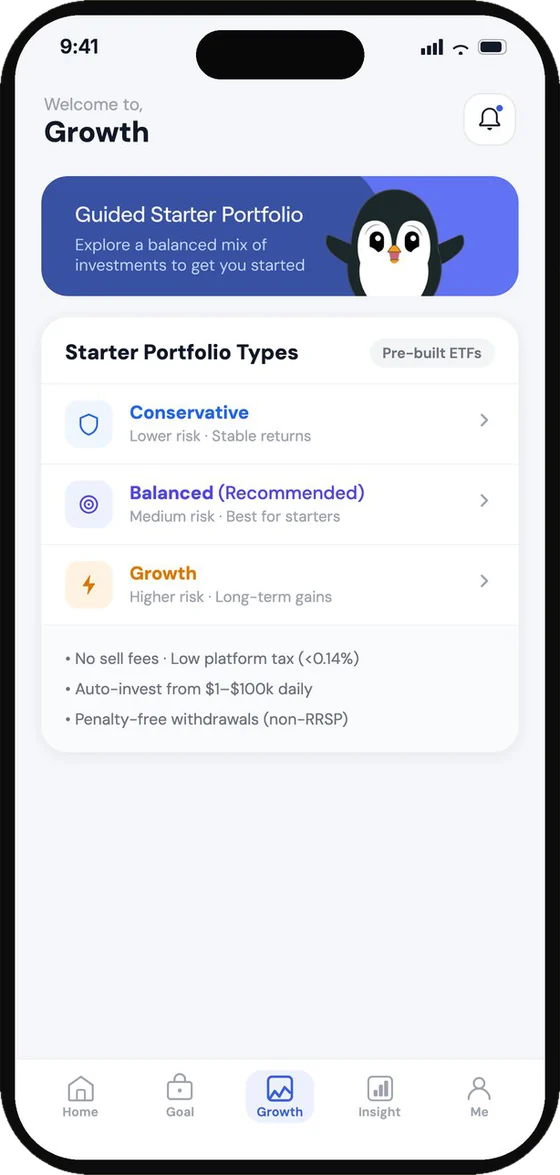
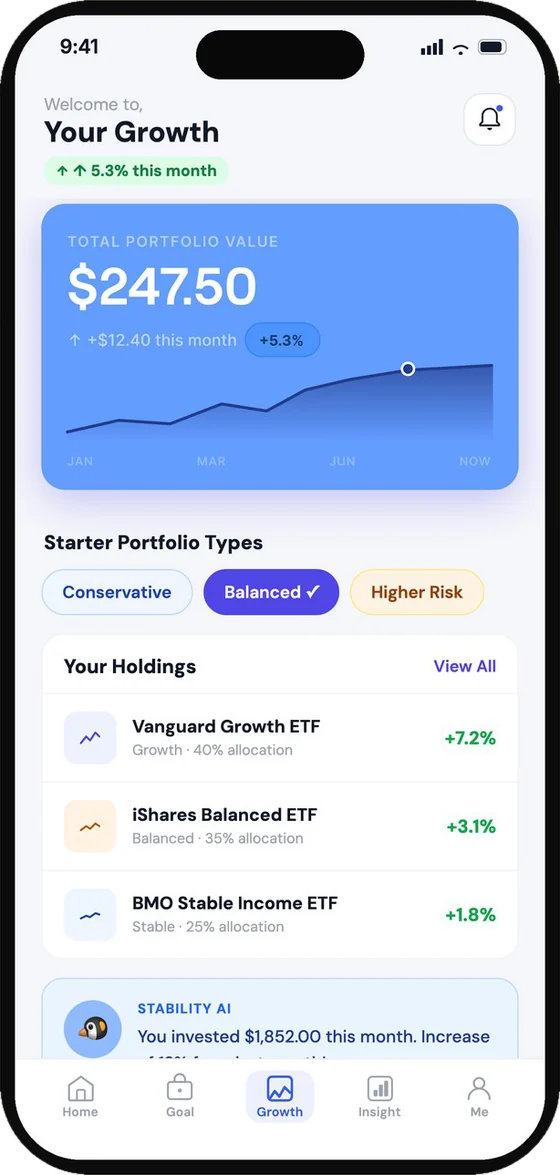
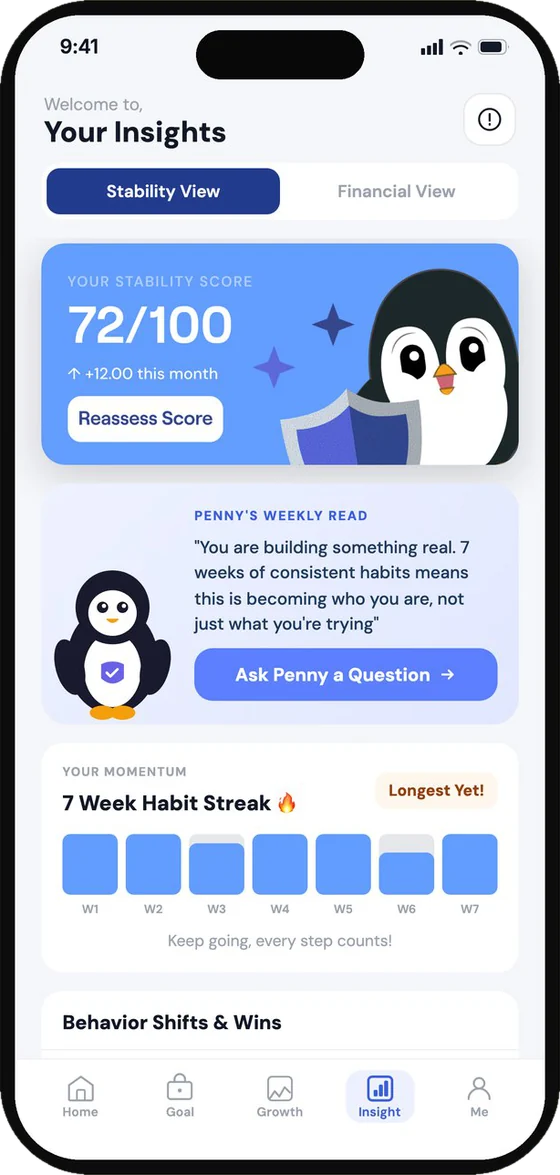
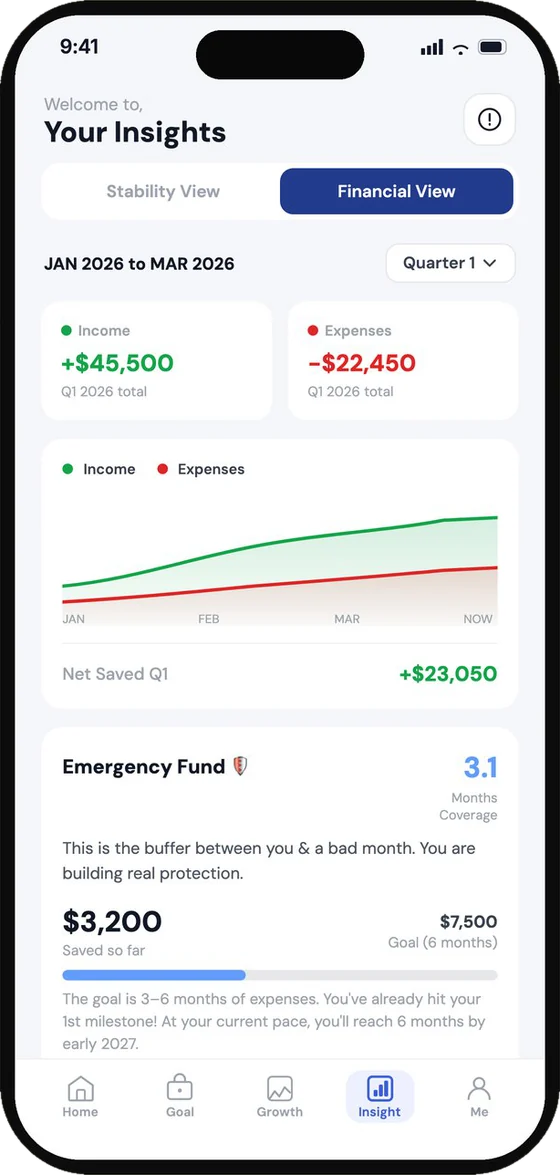
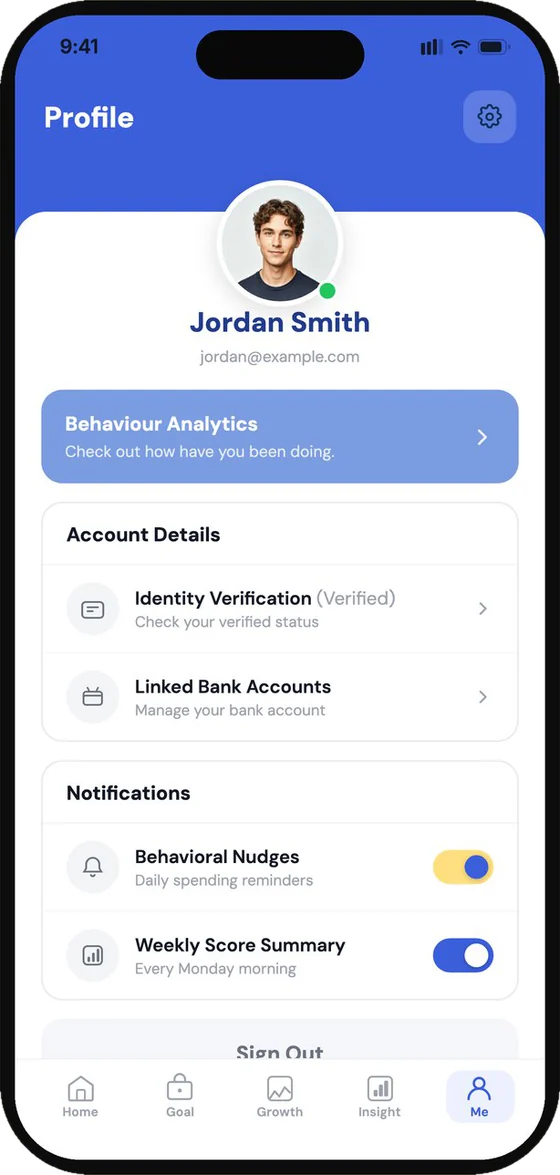
For Manulife, Stability meets customers at their first job rather than at retirement planning.
About 90% of Canadians aged 25 to 34 already manage money online. The pitch named four kinds of value: an earlier entry point, higher lifetime value from customers who invest consistently, lower risk from preventive habits, and closer ties with the employers and universities that offer Stability as a benefit. Revenue would come from assets under management, from employers and universities paying for access, and from users moving into Manulife’s other products.
I built the high-fidelity prototype as a web app, and the pitch ended with its QR code.
The prototype covers home, goals and habits, growth and insights, so the audience could try it on their own phones. The team won Best Prototyping and Best Storytelling. Open the prototype ↗
