Founder & Speaker Website
evelynmora.com is the personal website of Evelyn Mora, the founder and CEO of VLGE, an AI data company, and a speaker on human data, physical AI and sustainability. I redesigned it, from a sourced record of her work to the site structure, the brand and the front end.
- Role
- Design engineer: research, information architecture, brand and front end
- Client
- Evelyn Mora, founder and CEO of VLGE
- Timeline
- October 2026
- Built with
- Claude Code, HTML, CSS, JavaScript, Three.js
- Links
- evelynmora.com ↗
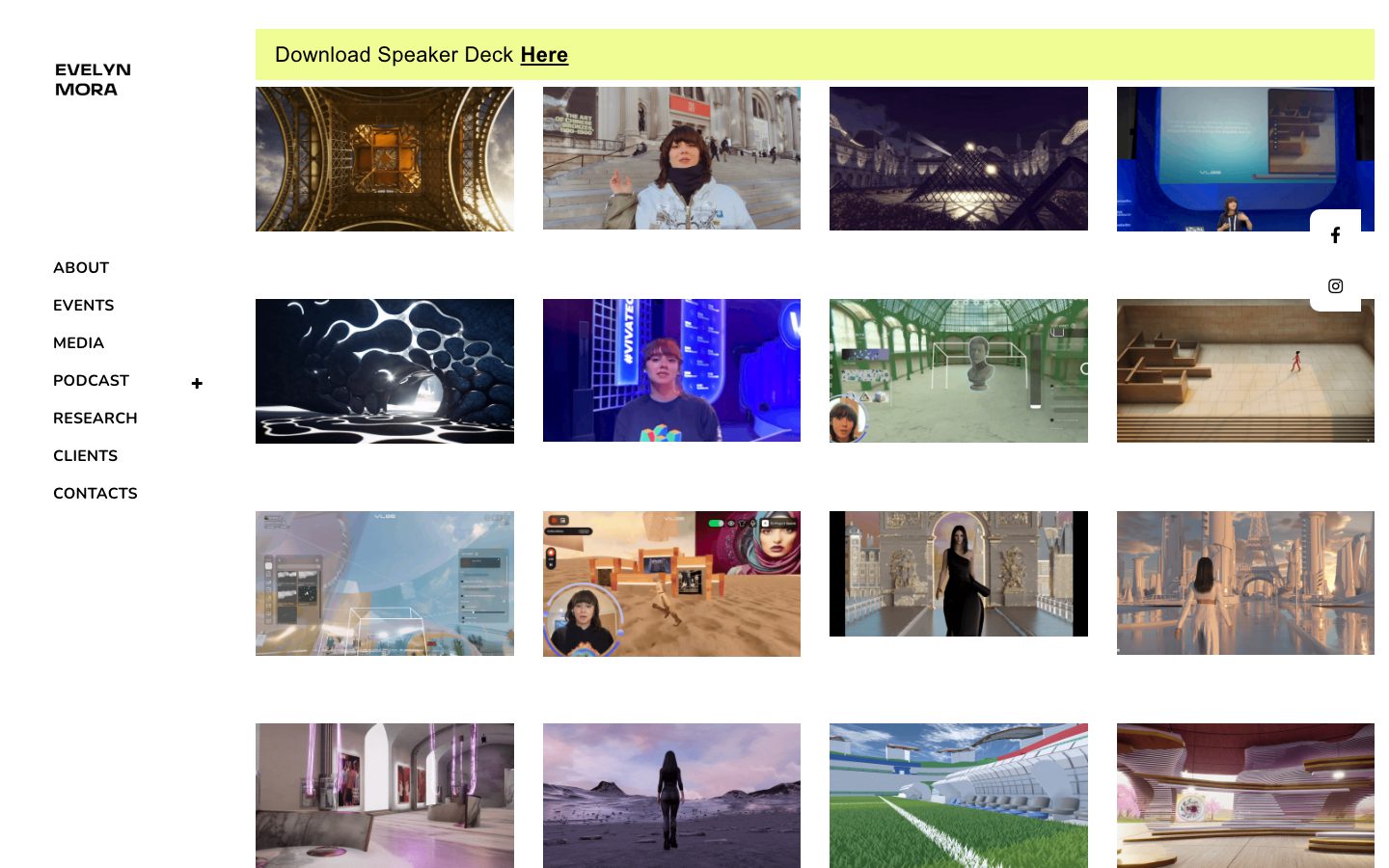
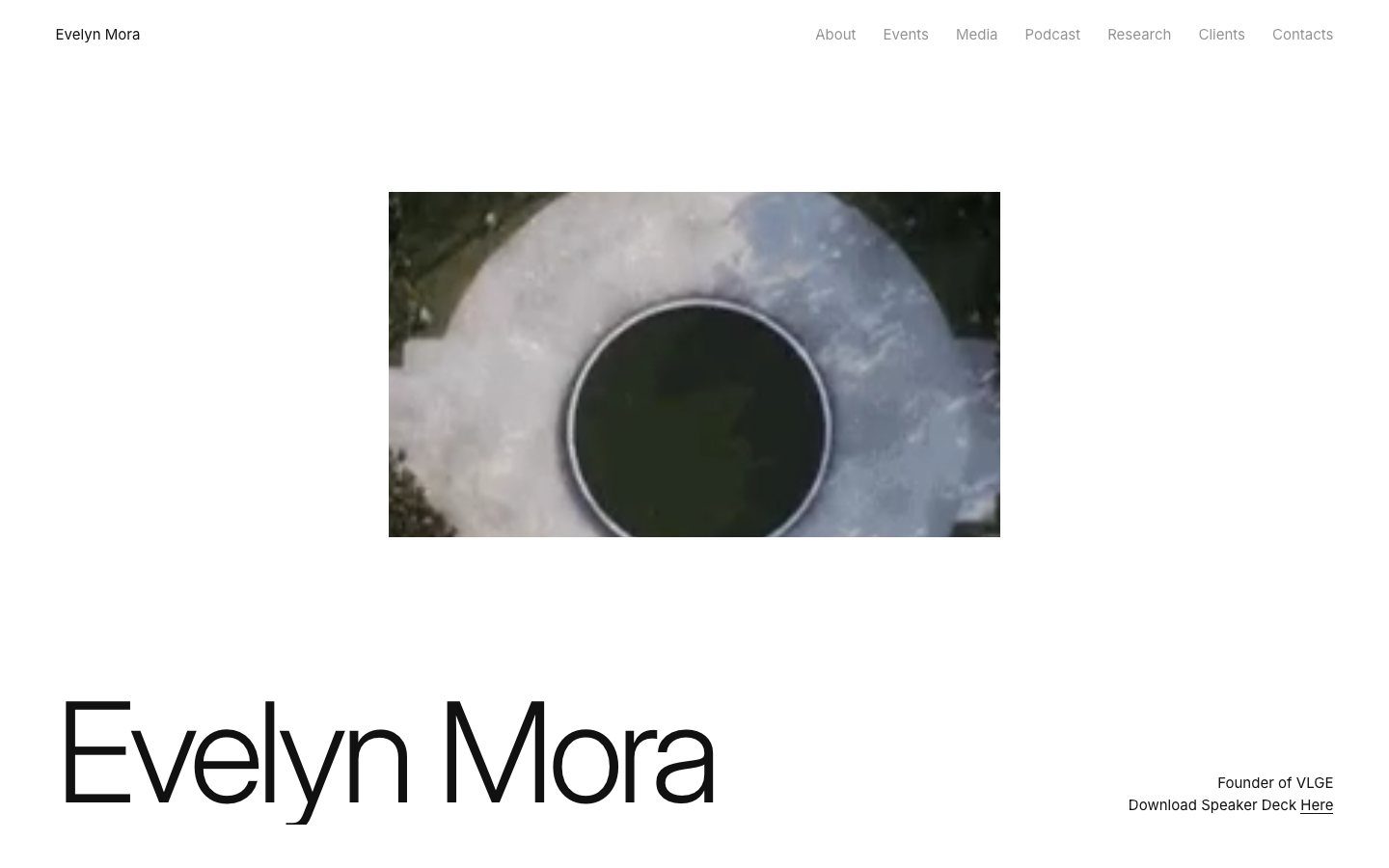
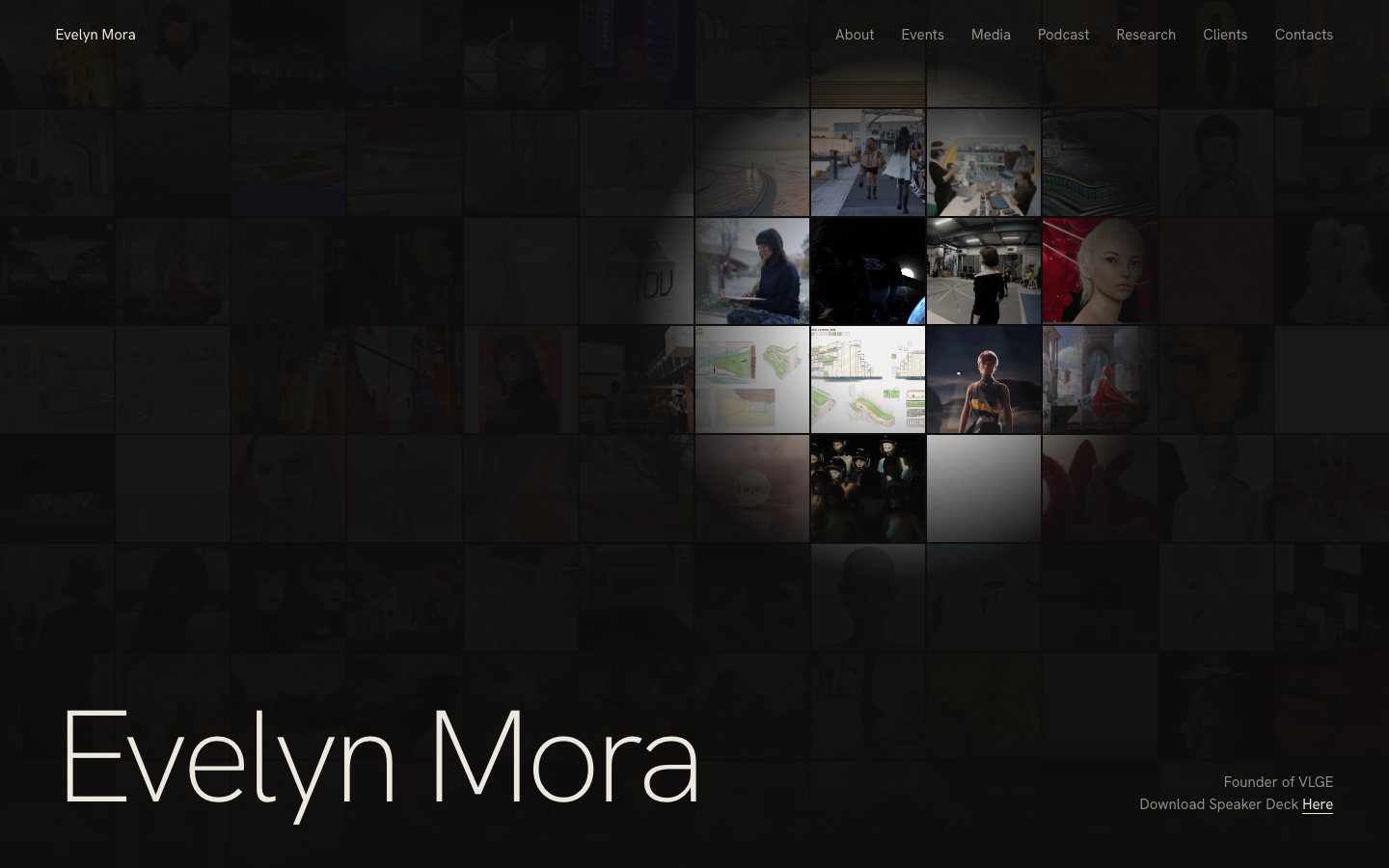
The previous site was a wall of images under a seven-item menu, and it did not say what she works on.
Evelyn Mora founded Helsinki Fashion Week in 2014 and later VLGE, a company that builds training data for AI from how people behave in 3D worlds. She speaks at events such as SXSW. Her website has two jobs: to get her booked as a keynote speaker, and to be read correctly by search engines and AI search.
Structure
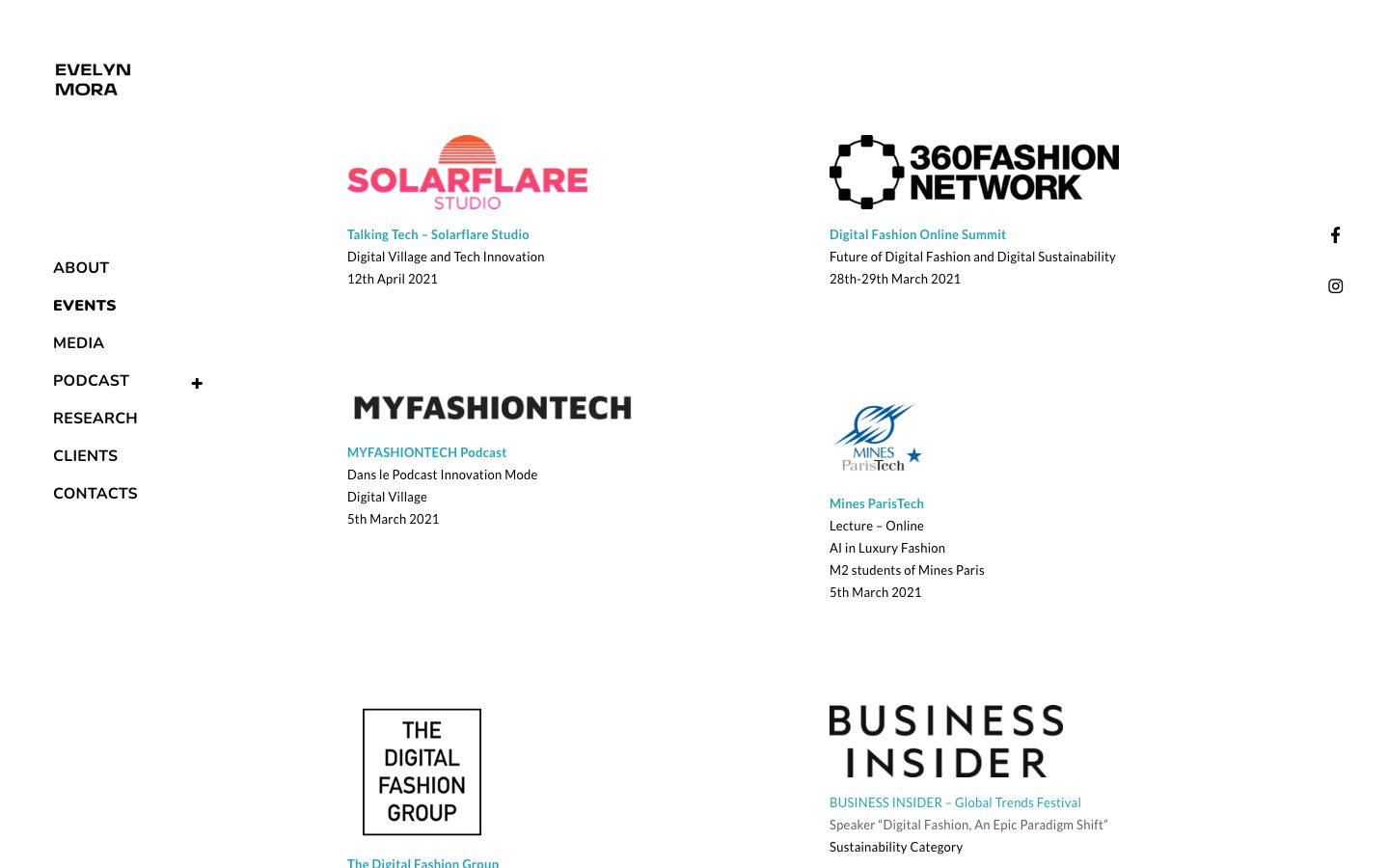
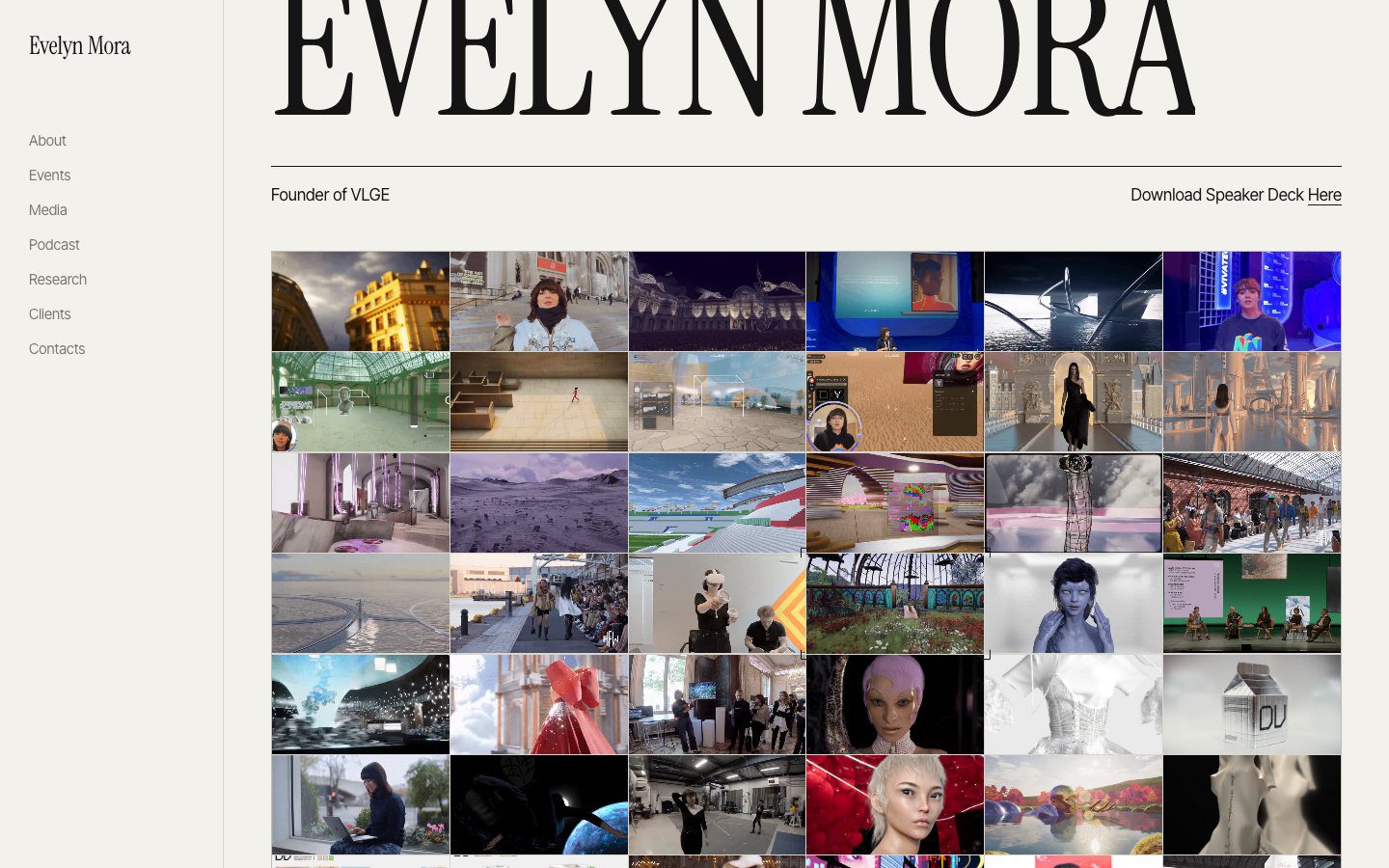
The home page was a grid of 96 images without captions. The menu sorted her work by type of material, as Events, Media, Podcast, Research and Clients, and the newest event listed was from April 2021.
Copy
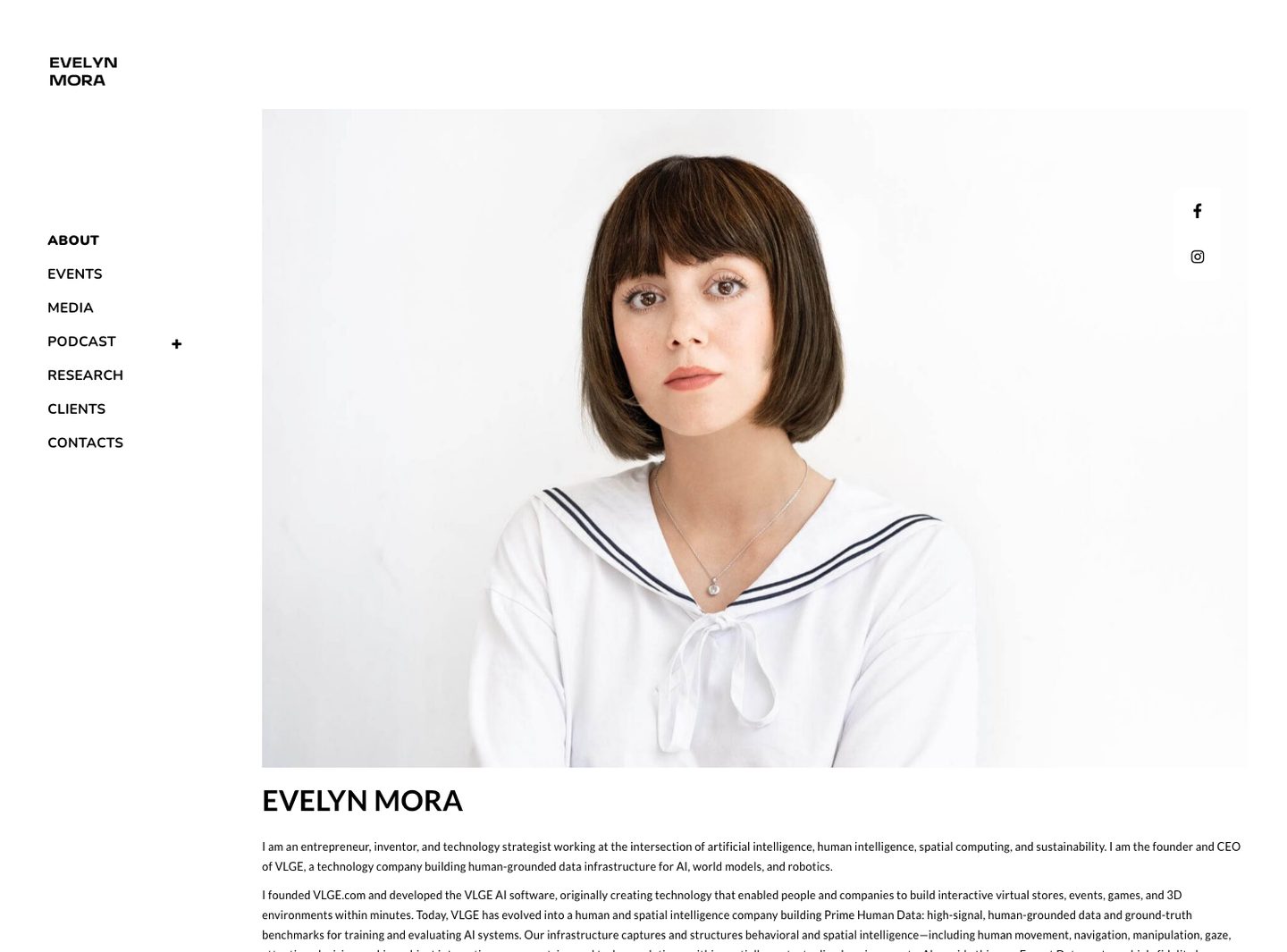
Her whole biography was one long paragraph on the About page, and her company and her own work were described in the same sentences.
Before designing anything, I collected everything she has done in public into one record, with a source for each item.
The sources were her previous site, her speaker deck, her CV, 70 Instagram posts, her LinkedIn essays and the press. The record holds 13 works, 8 papers and essays, 11 talks, 46 earlier events, 19 press features, 30 Vogue stories and 22 recognitions, each with its date and source. Every text and picture on the new site comes from this record.
Open questions
Claims with no public source, such as an unpublished paper or an award, went to her as a list of questions and stayed off the site until she confirmed them.
Her talks, works and essays return to five themes, and each theme opens with the question she asks.
The five themes are Physical AI, Human Data, Spatial Intelligence, Fashion & Retail and Sustainability. Each has its own page, which opens with one question, such as “Can a place become intelligent?” for Sustainability or “Why will fashion save AI?” for Fashion & Retail, and collects the works, writing and talks that answer it.
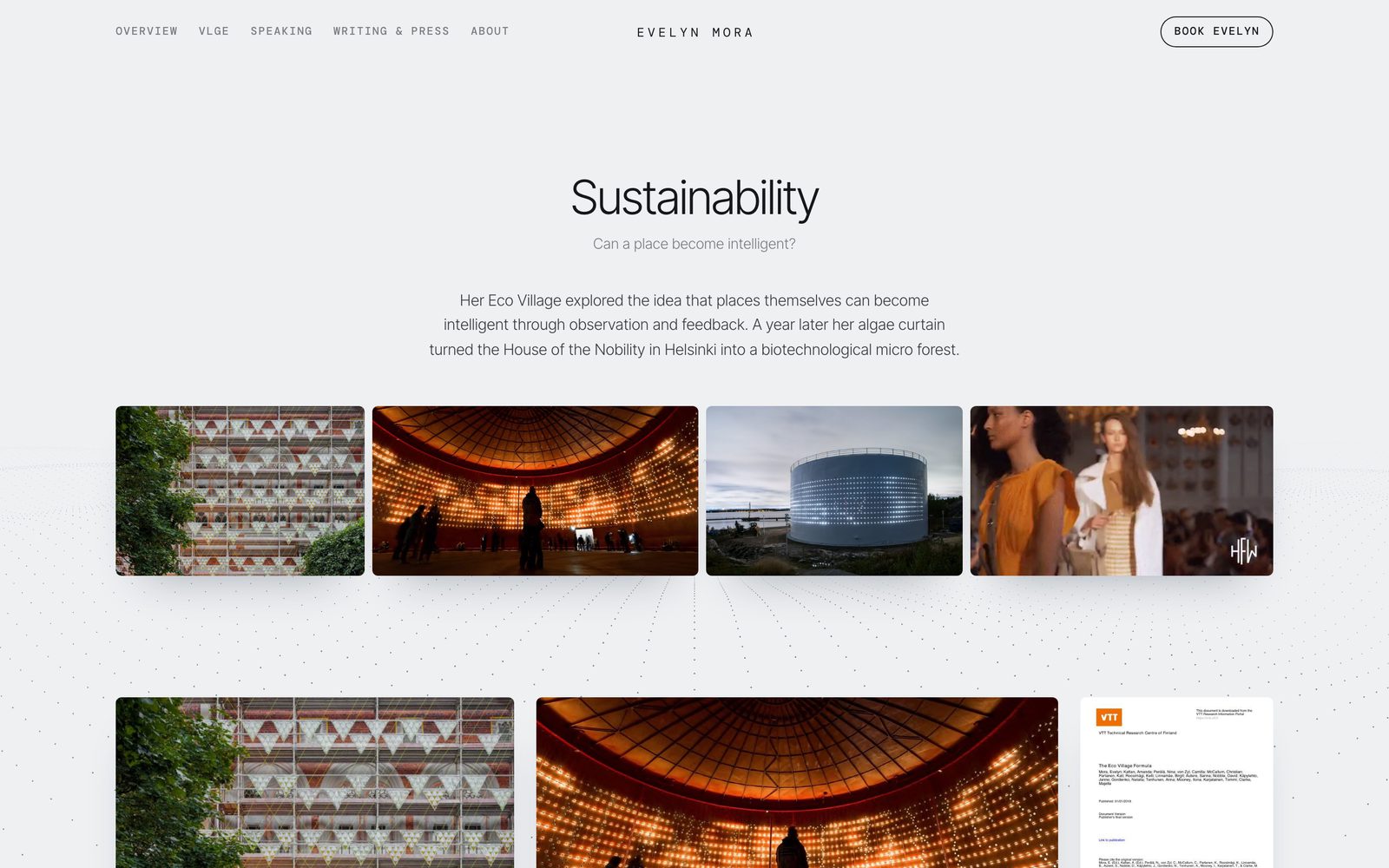
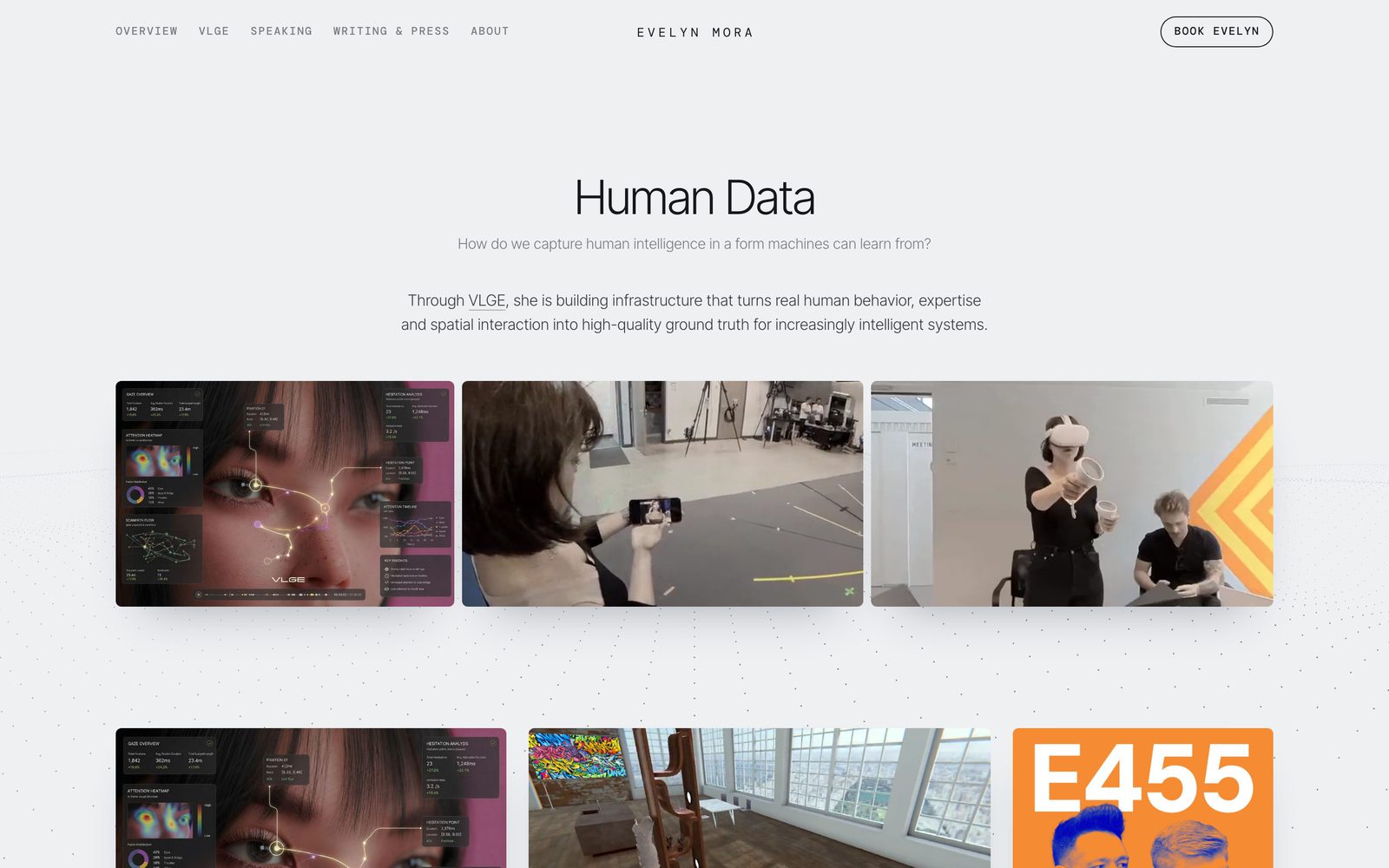
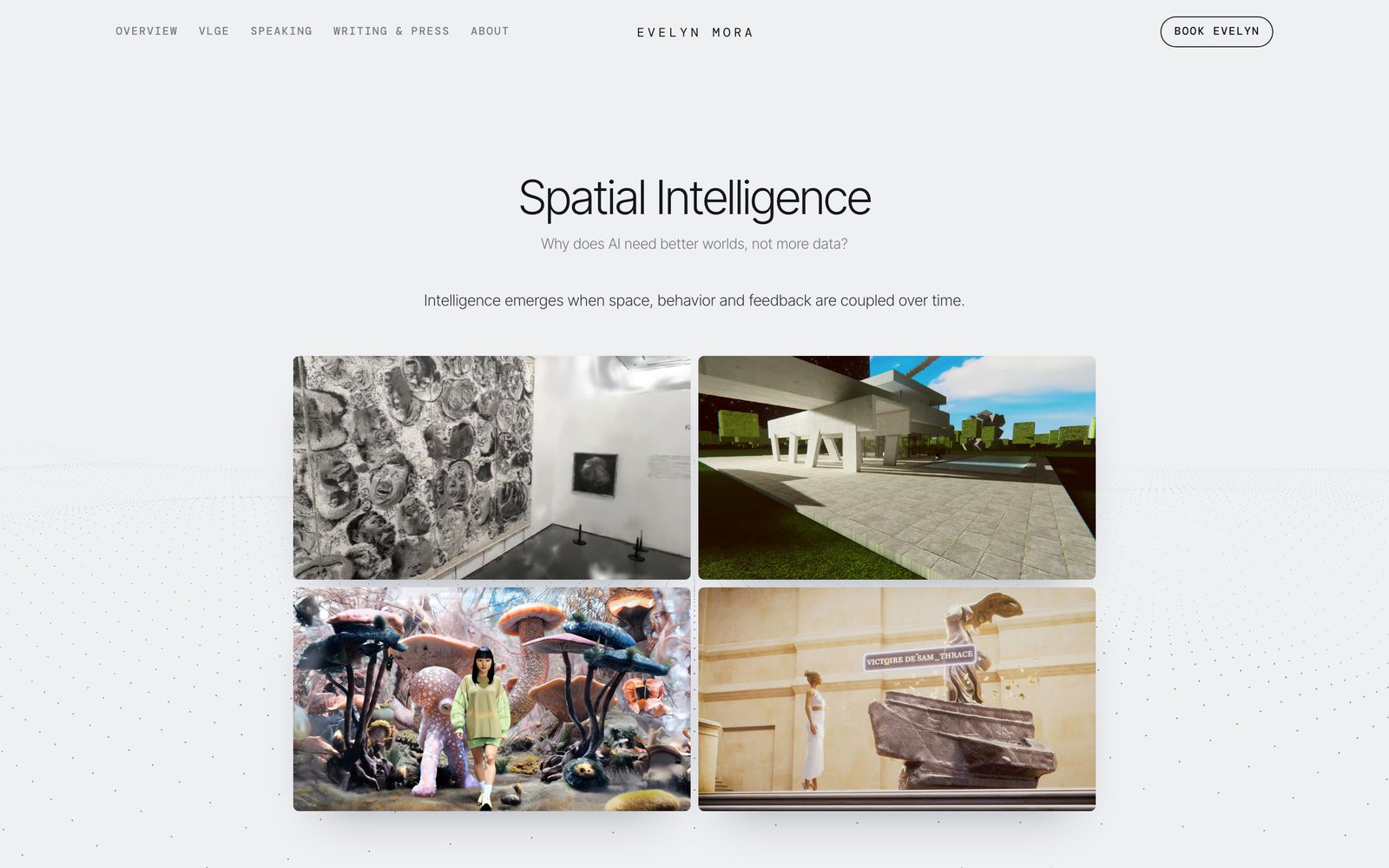
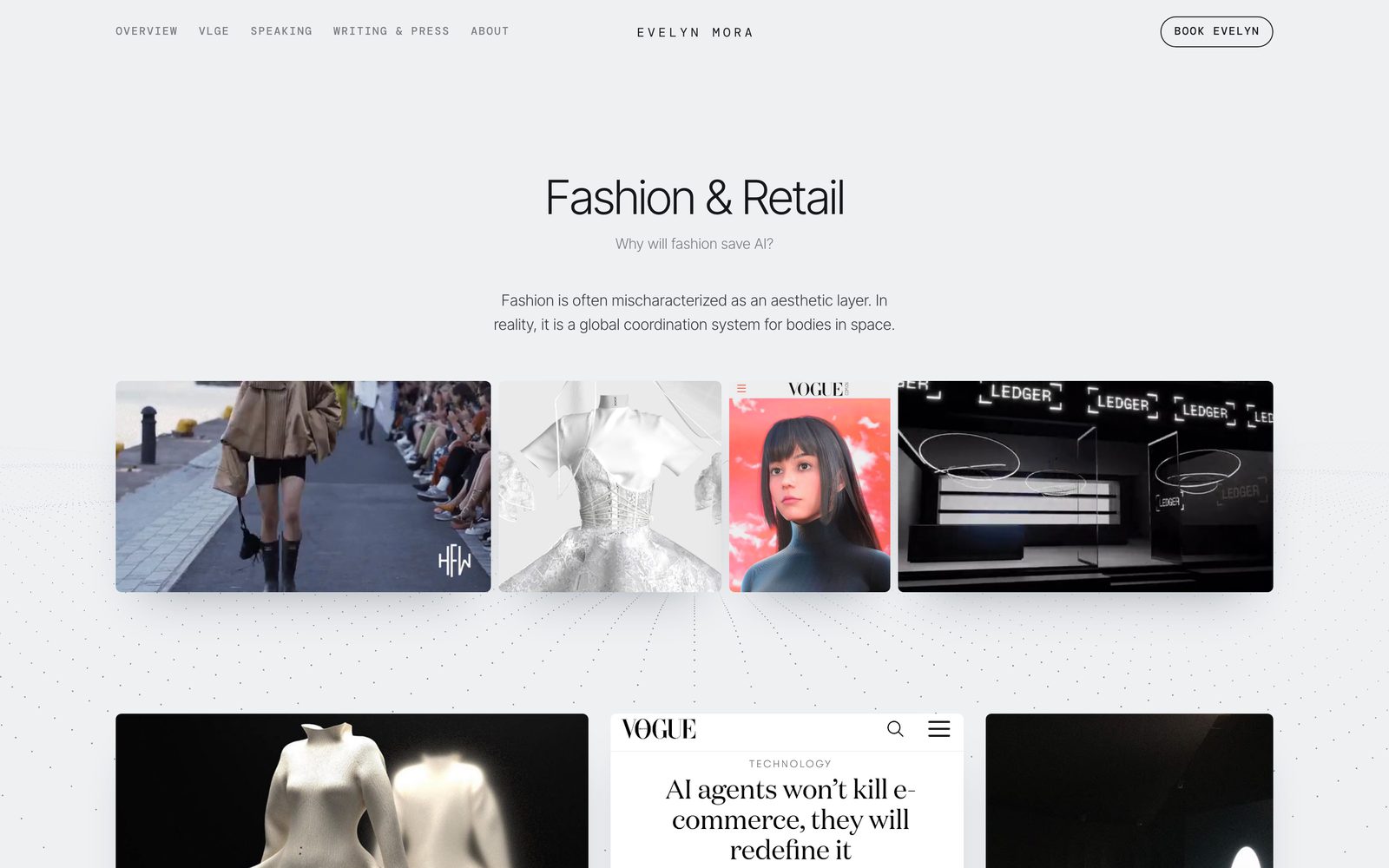
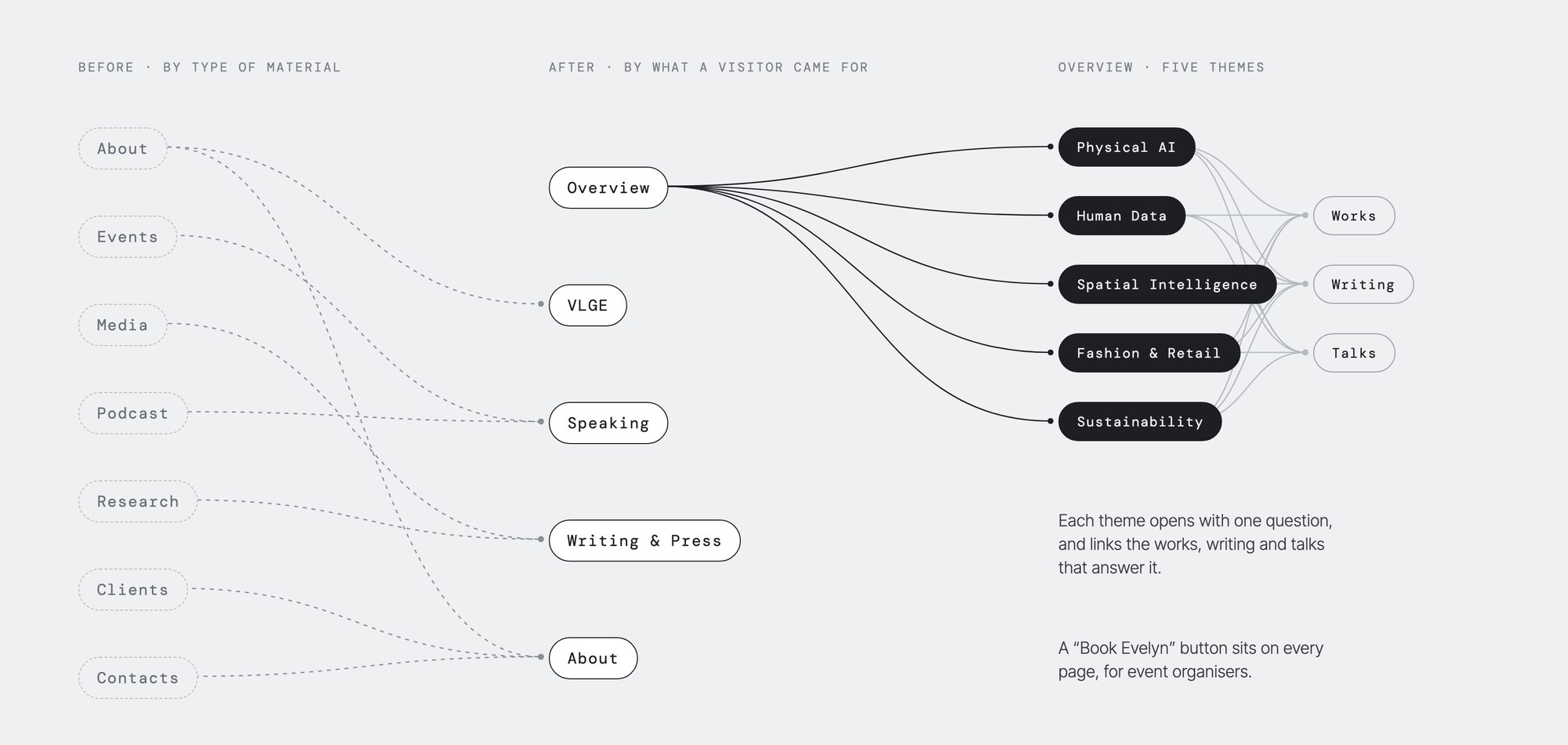
The menu now follows what a visitor came for, instead of the type of material.
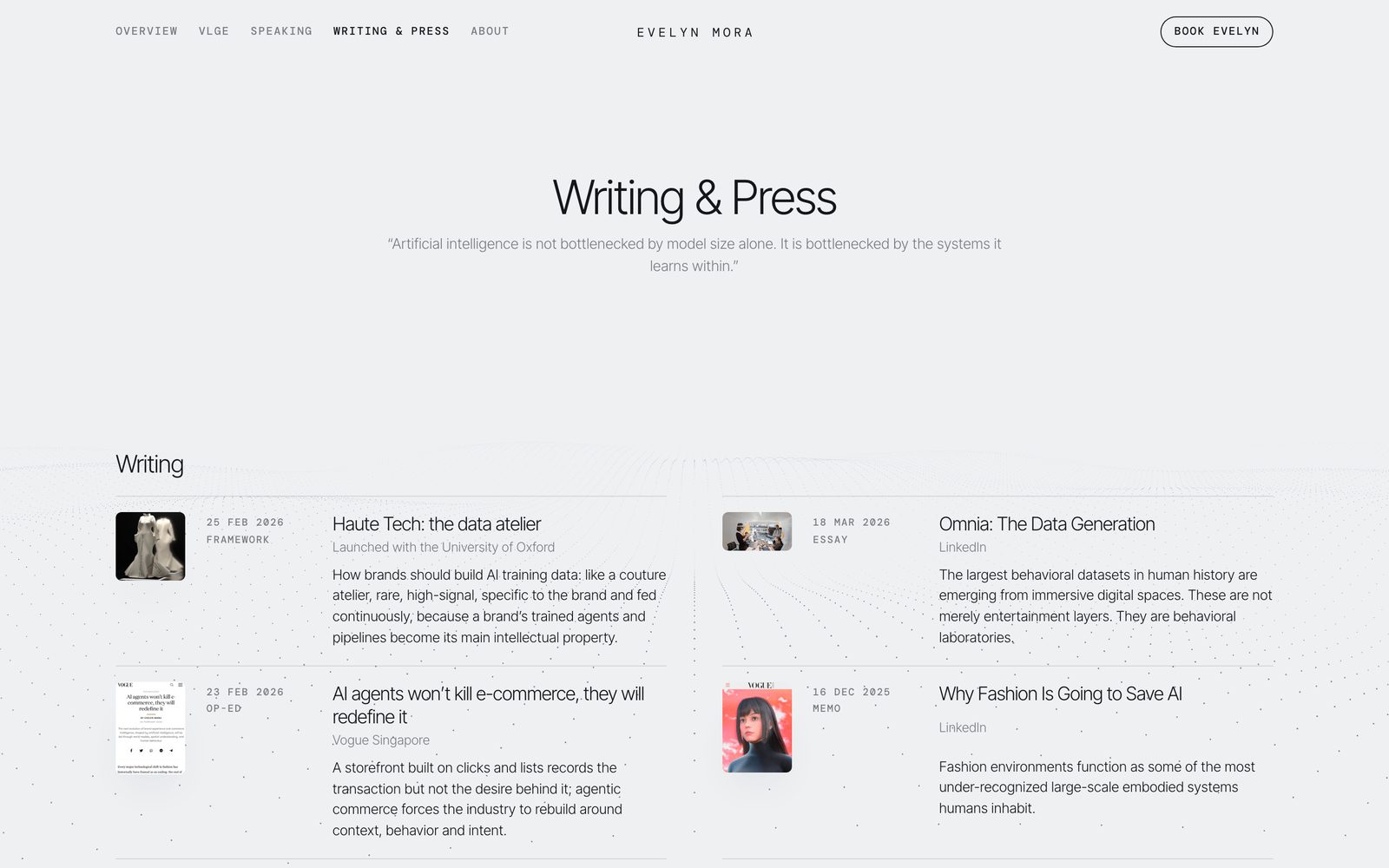
The seven menu items became five: Overview, VLGE, Speaking, Writing & Press and About. Events and podcast episodes moved to Speaking, media coverage and research to Writing & Press, and clients and contact details to About. The five themes sit under Overview.
Booking
Every page has a “Book Evelyn” button for event organisers, and the speaker deck is one click away.
Search
Every page carries structured data about her, and an llms.txt file describes her work for AI search engines.
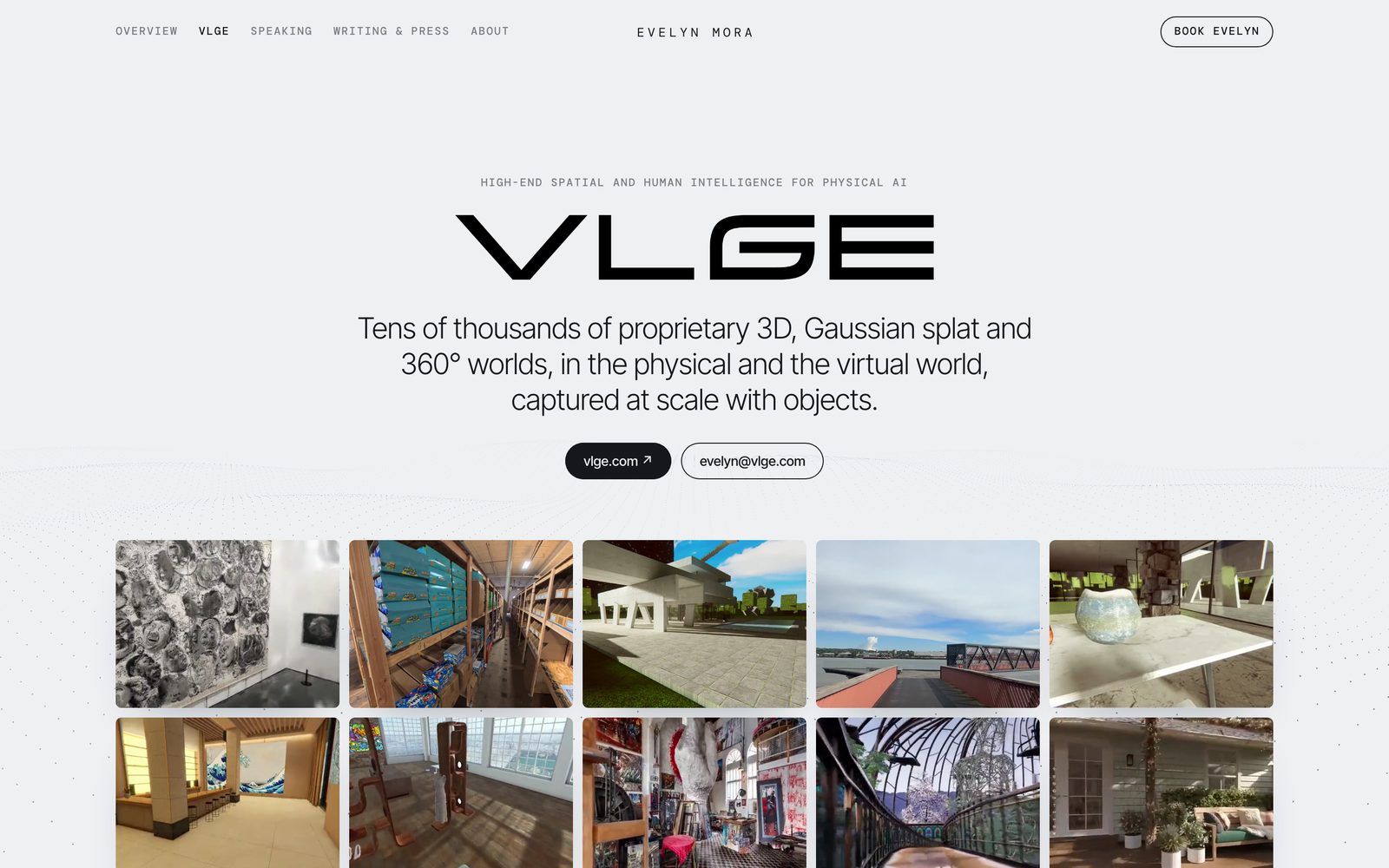
VLGE has one page of its own, and the rest of the site is about her.
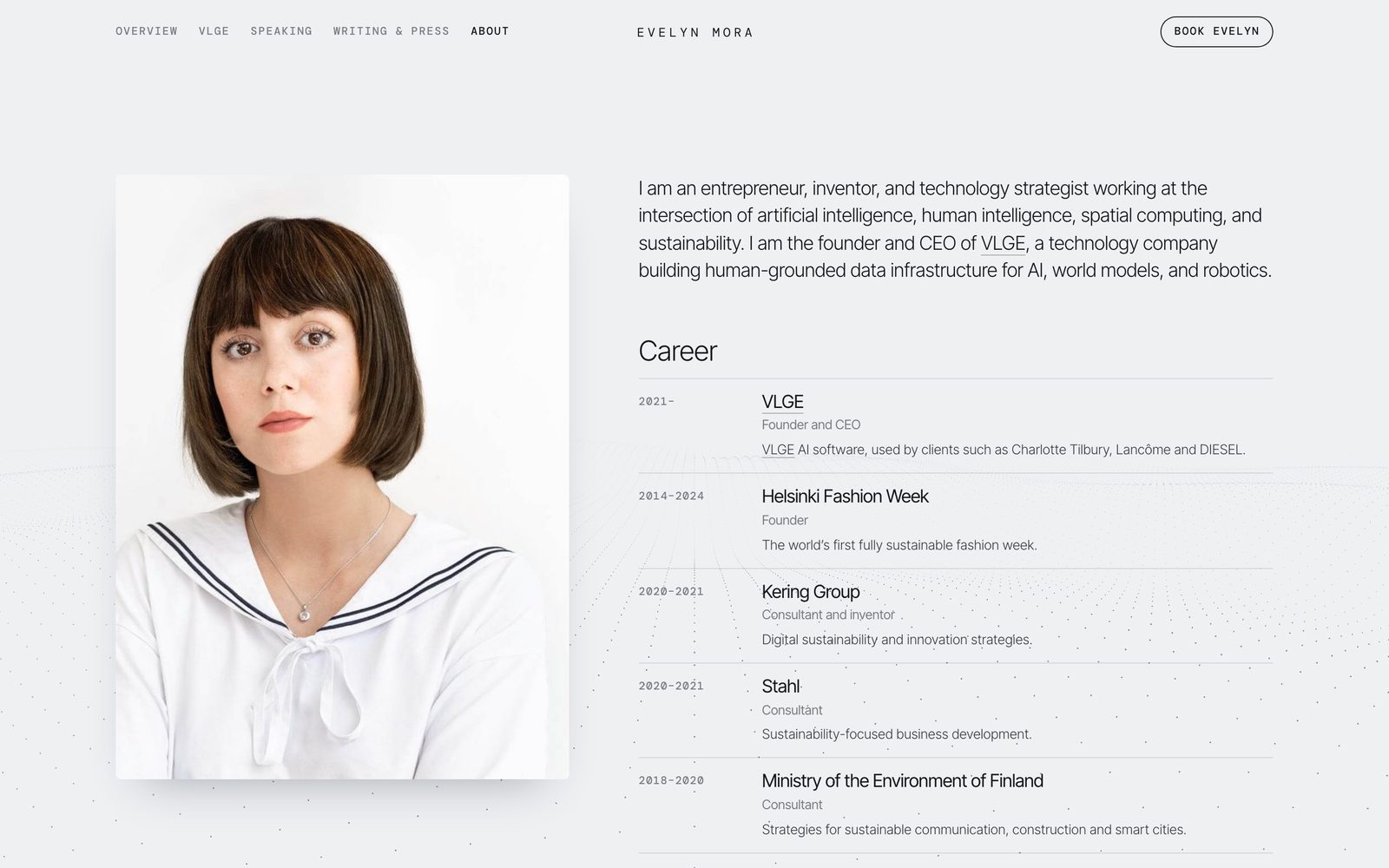
The VLGE page explains how the company grew out of her earlier work, from the Eco Village at Helsinki Fashion Week to VLGE, shows the worlds built on it and links to vlge.com for the product. On the other pages, a work built on VLGE credits the company and links to that page. About lists VLGE as one role in her career, beside Helsinki Fashion Week, Kering and the Ministry of the Environment of Finland.
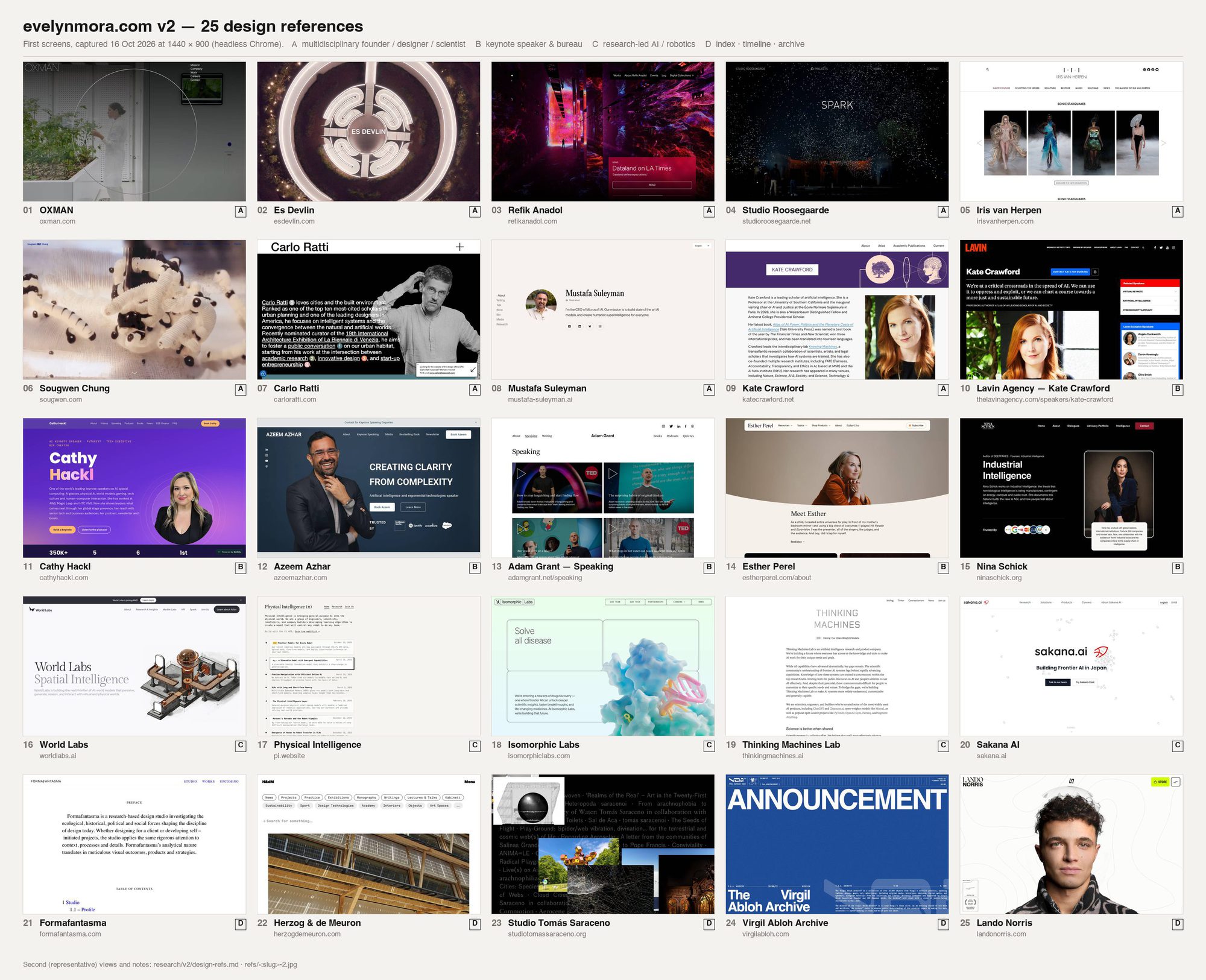
Her brief asked for science, art, data, technology and fashion combined in an expensive way, so I studied how other sites do that first.
She named the magazine i-D and the Gagosian gallery as references. I captured 380 sites in 11 categories, from fashion houses and galleries to founders and keynote speakers, and for the second version kept 25 references, from artists and founders to AI research labs.
Six directions
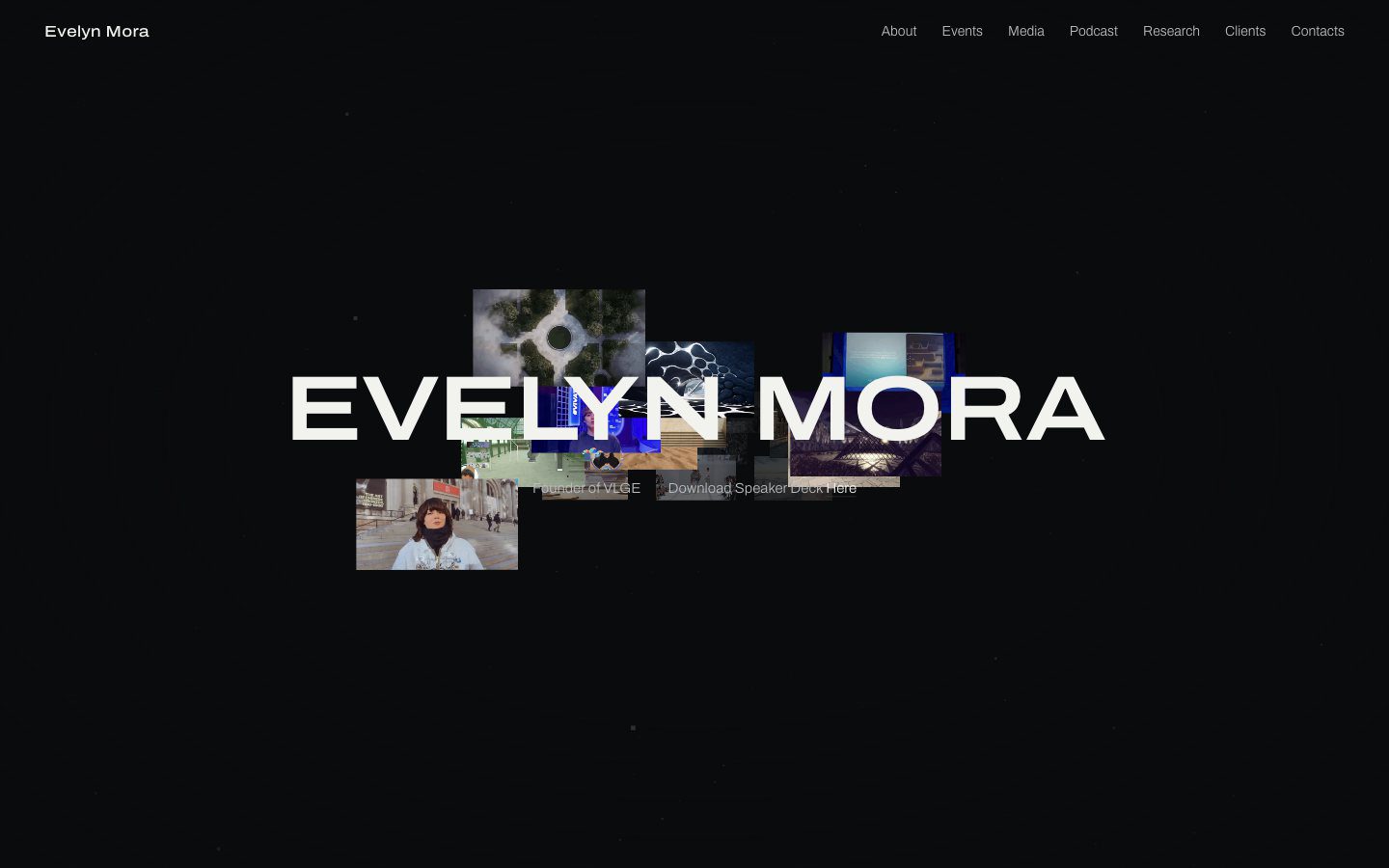
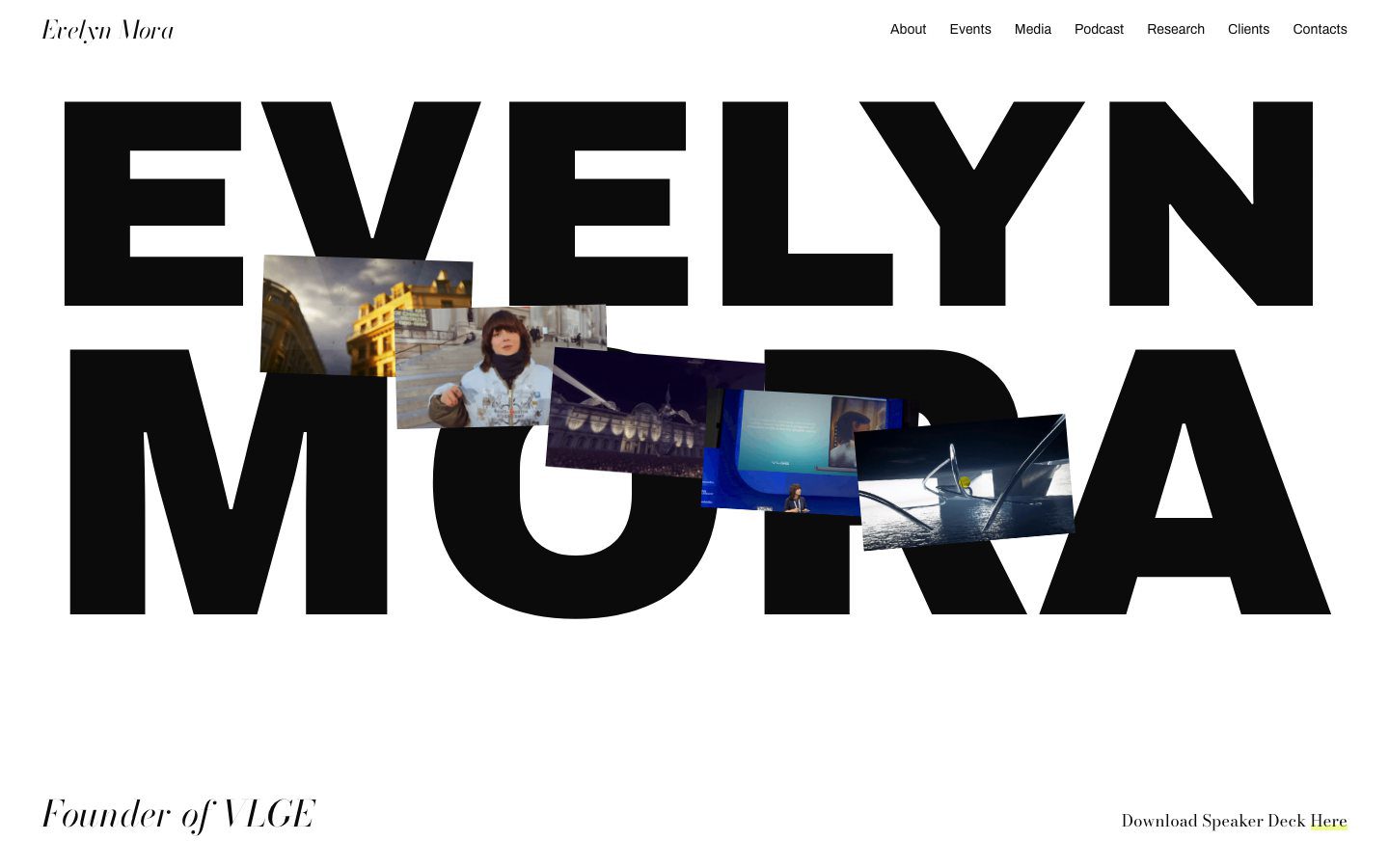
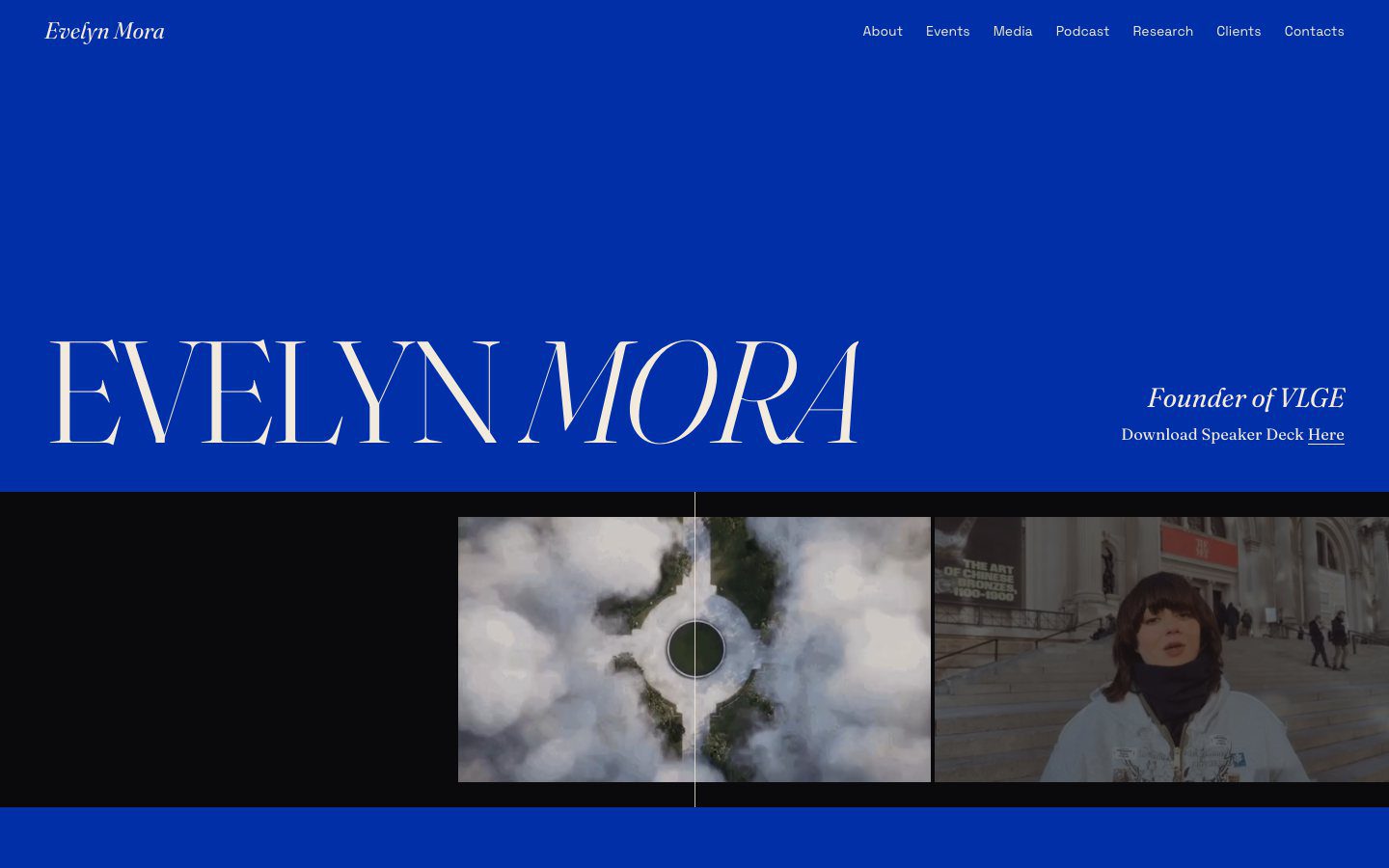
I proposed six directions, from a science journal to a gallery after dark. Her feedback set the course: the site needed more of her own material, such as her Instagram and her speaker deck, and the Physical AI page needed to be more scientific.
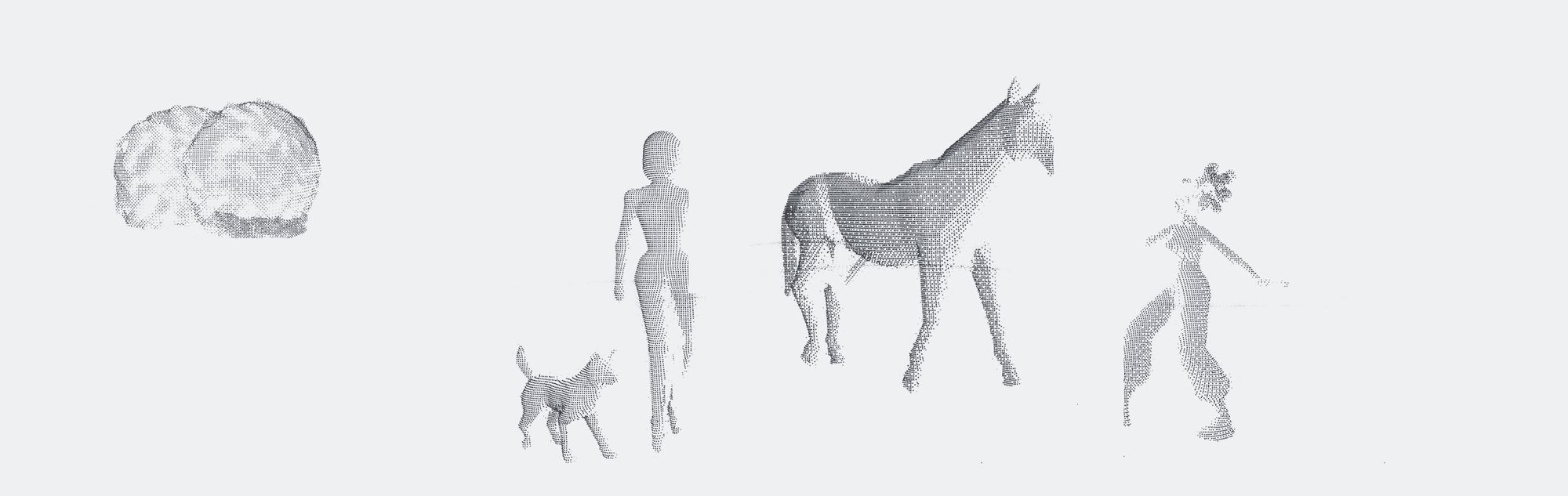
The brand pairs a quiet, gallery-like page with point-cloud figures, the form in which 3D capture records a body.
The page is pale grey and set in DM Mono and Inter Tight. The home page opens on a dotted floor where point-cloud figures form one after another: a brain, a woman walking a dog, a horse and a dancer. A point cloud is the raw output of 3D scanning and spatial capture, so the opening shows her subjects, virtual reality, spatial computing and AI training data, before any text.
Each page is built around what its reader needs to find.
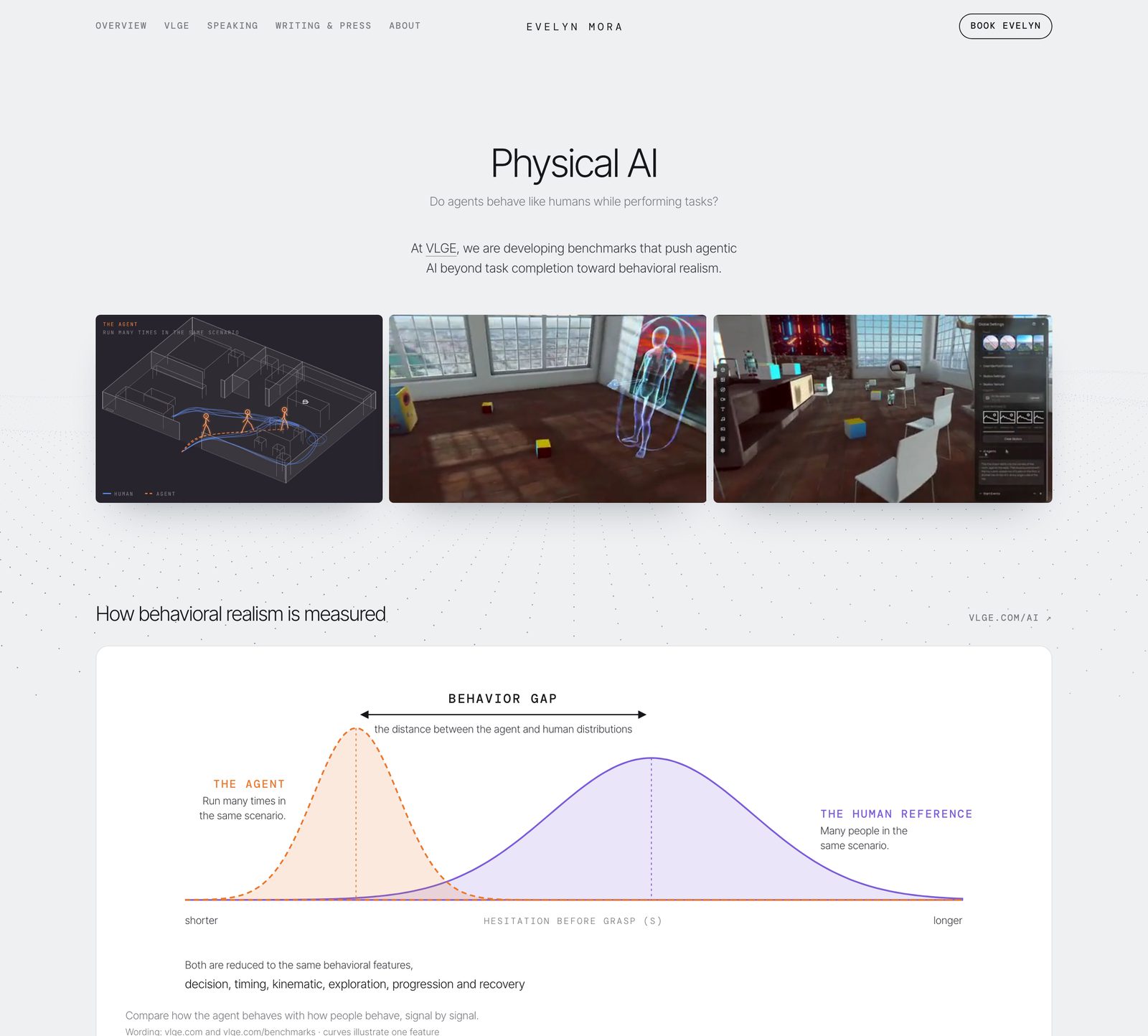
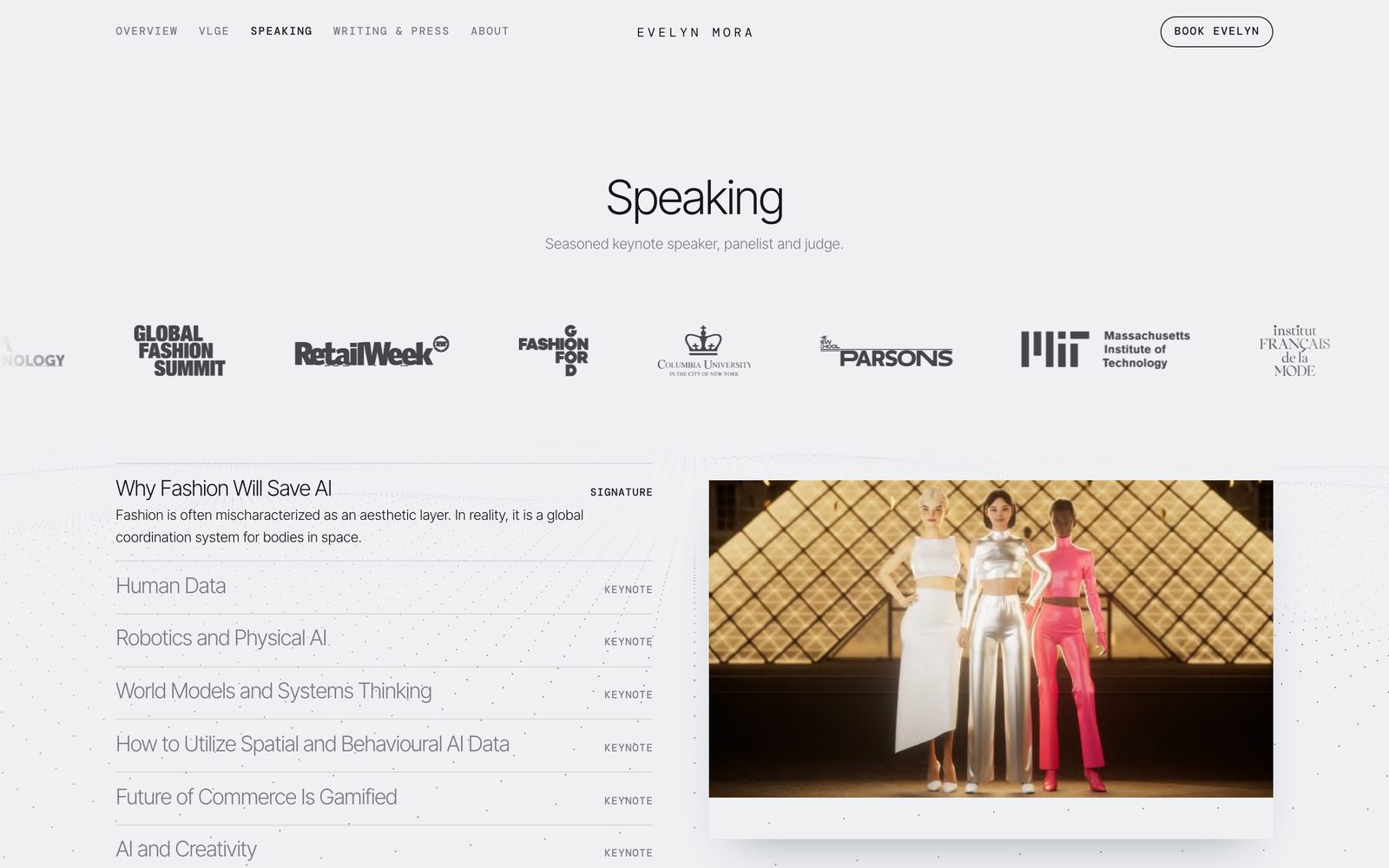
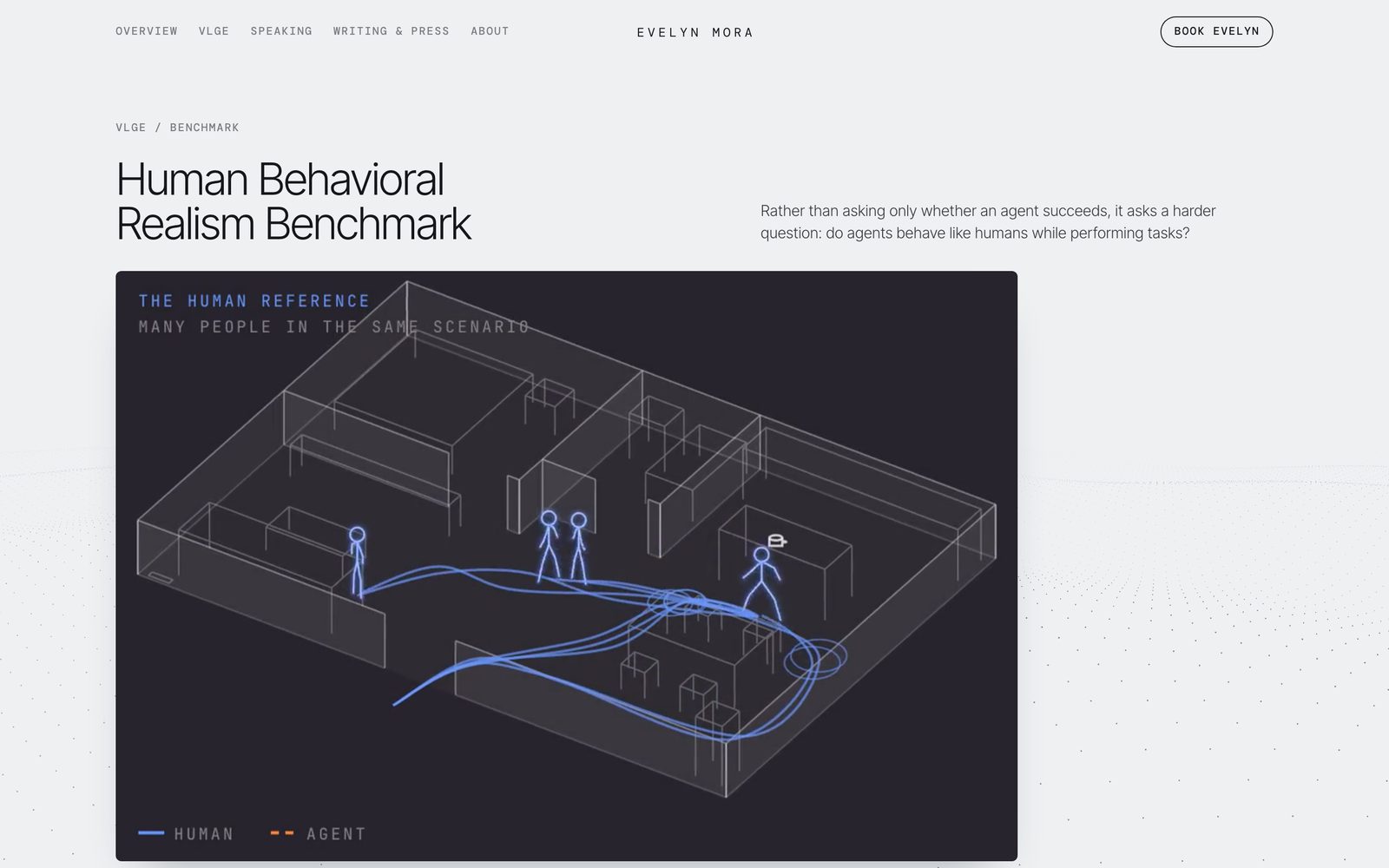
Speaking lists her keynote topics, then her stages, talks, events and podcast episodes. Physical AI explains how VLGE’s benchmark compares an AI agent’s behaviour with people doing the same task, with the figures from vlge.com.
I built the site myself with Claude Code.
It is 31 static pages in HTML, CSS and JavaScript, with Three.js for the opening. Analytics stay off until a visitor accepts them in the cookie banner.
